What to Check
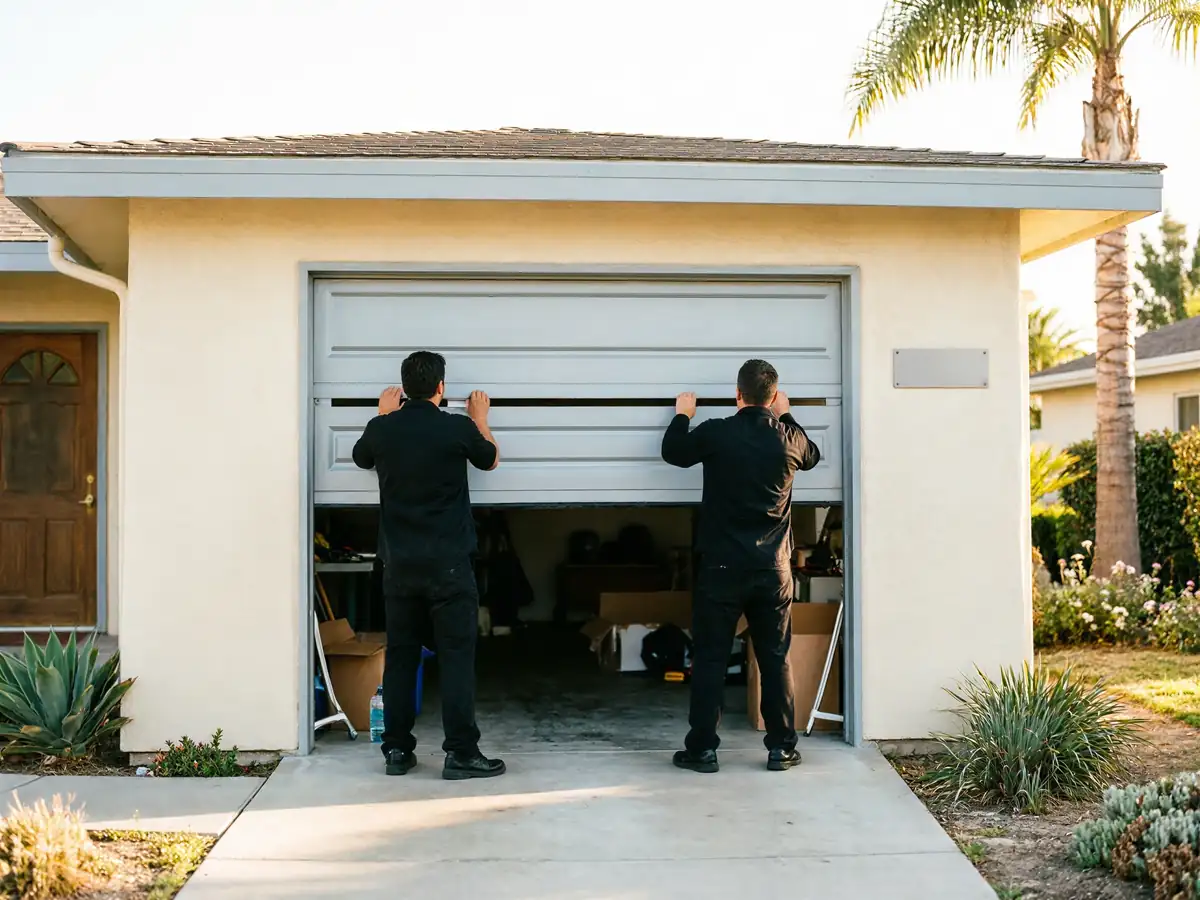
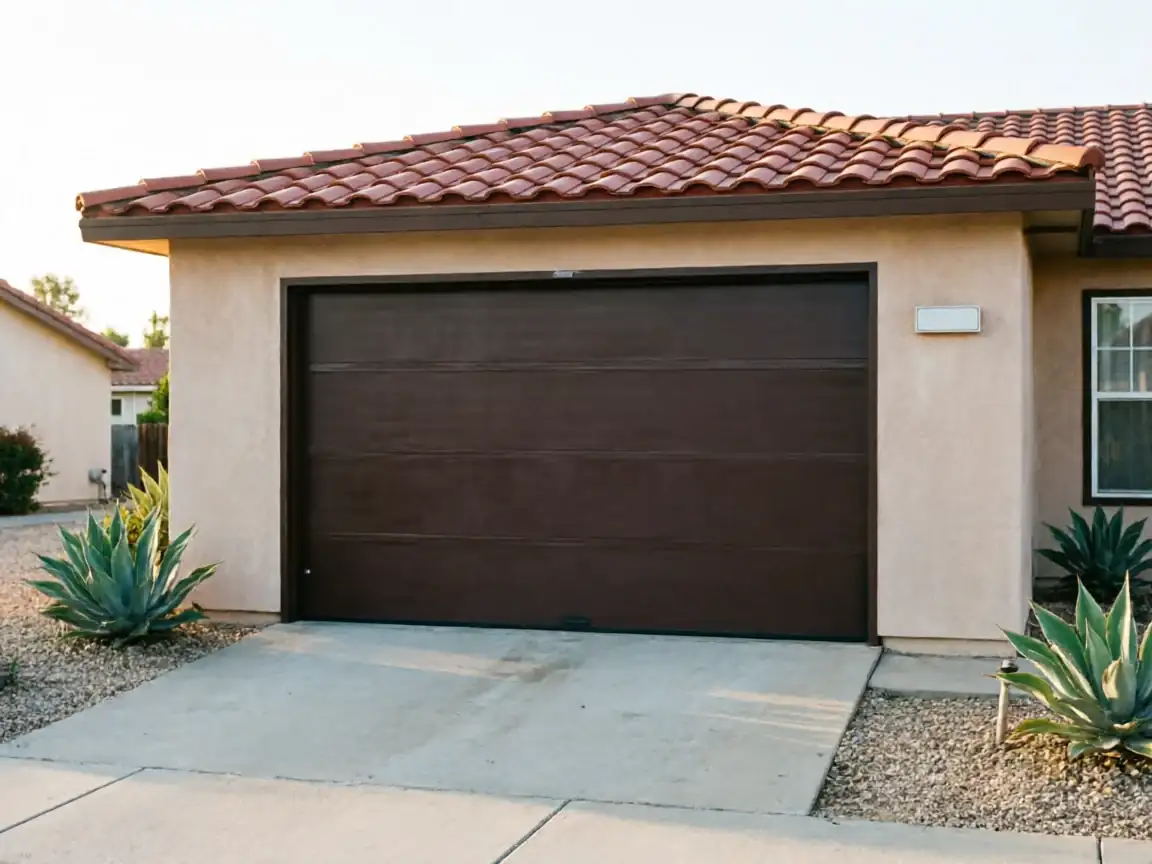
Start with the door panel itself. Fairfield's housing stock runs from 1938 to 2002, with the median landing around 1979 and the bulk of it built through the 1960s and '70s across the area's 19 named neighborhoods. A door from that era is almost always a single steel or wood skin with no foam core and no thermal break at the jamb. Press a palm flat against the inside of the panel on a warm afternoon - if it's warm to the touch, there's no insulation layer doing any work.
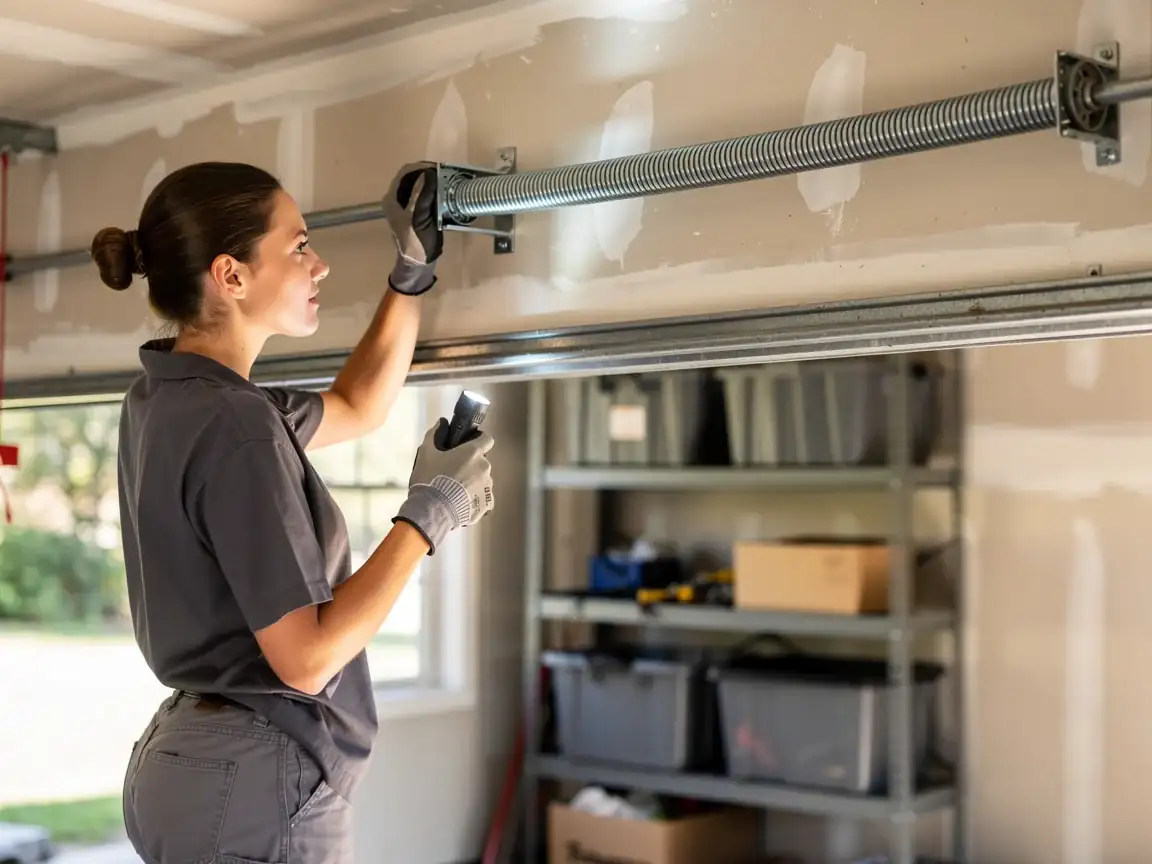
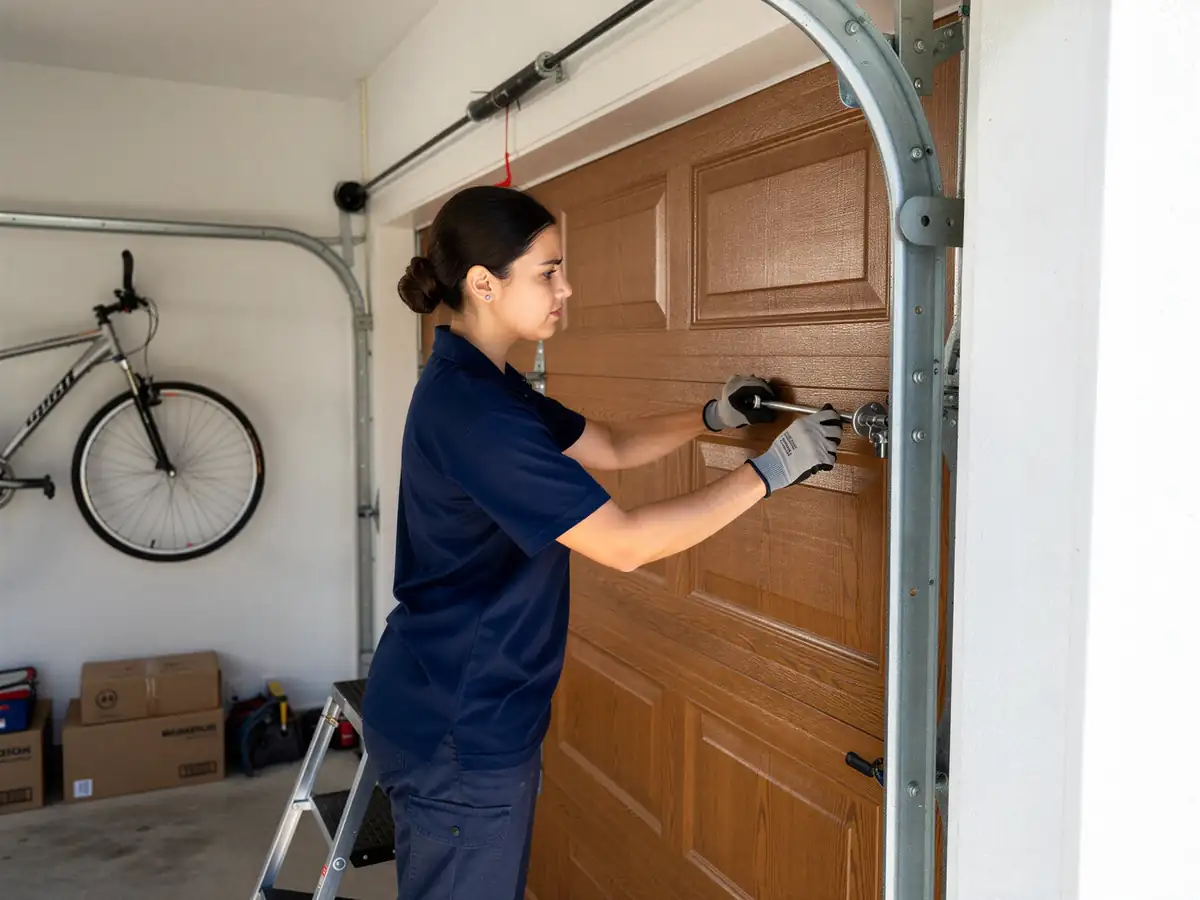
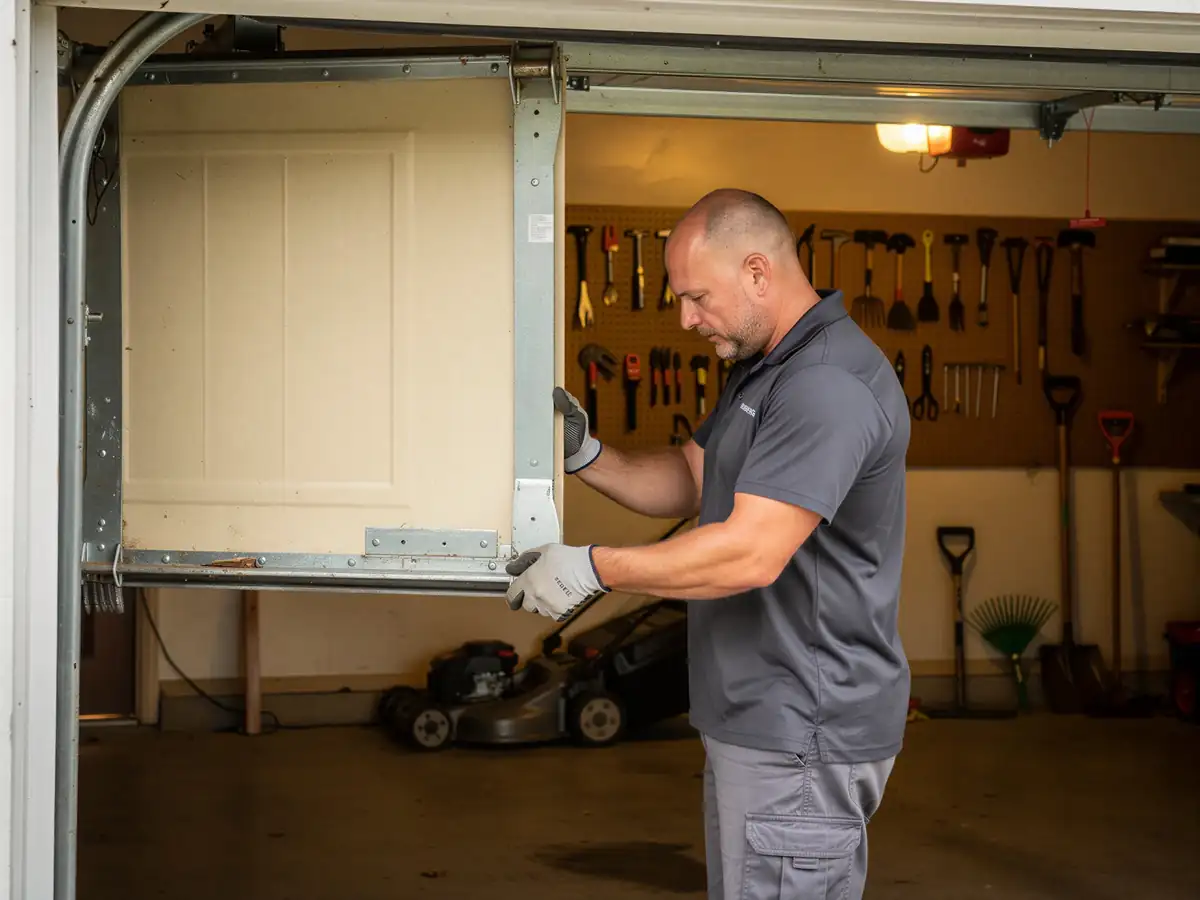
Next, check the weatherstripping at the bottom and sides. On a house this old, it's been replaced at least once, sometimes with a strip that doesn't match the original track width, which leaves gaps at the corners. Check the torsion spring mount too - houses from the 1960s and '70s often have the spring anchor bracket fastened straight into aging header wood, not a steel reinforcement plate, and that wood has had fifty-plus years to dry out and loosen its grip on the lag screws.
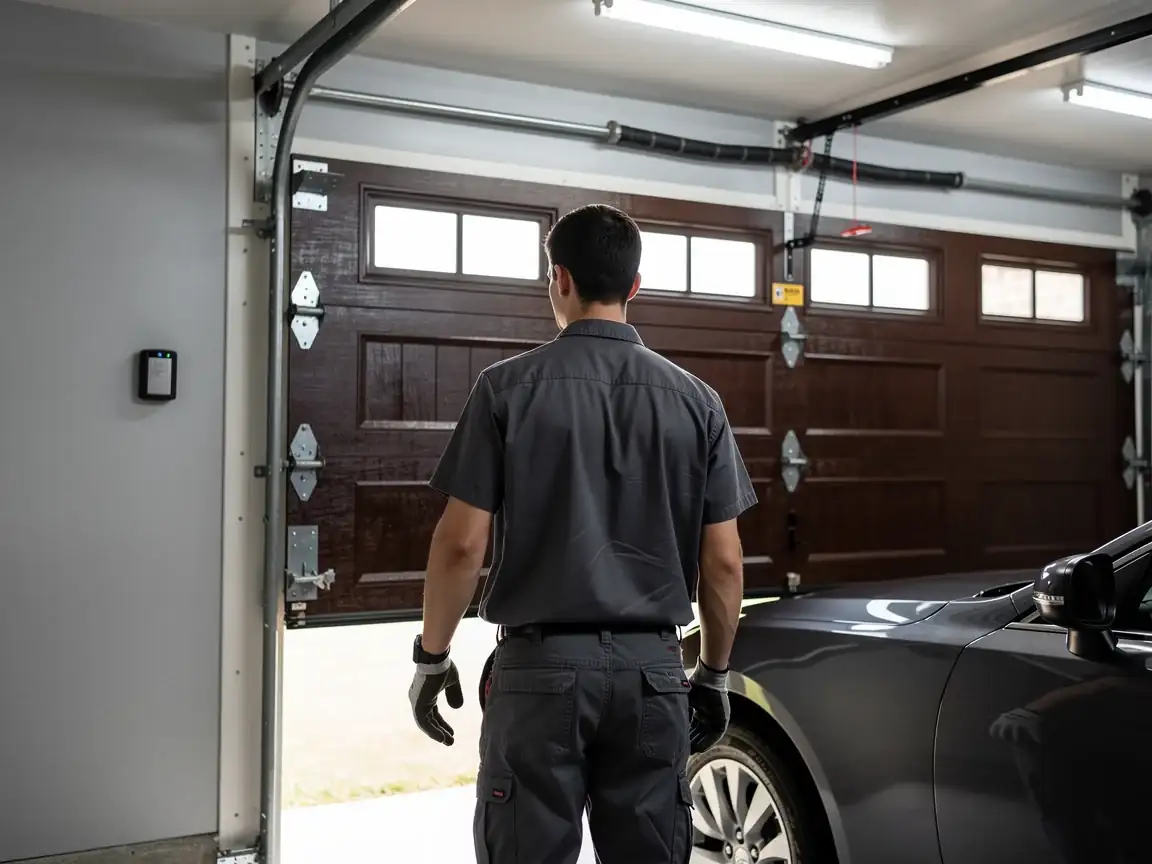
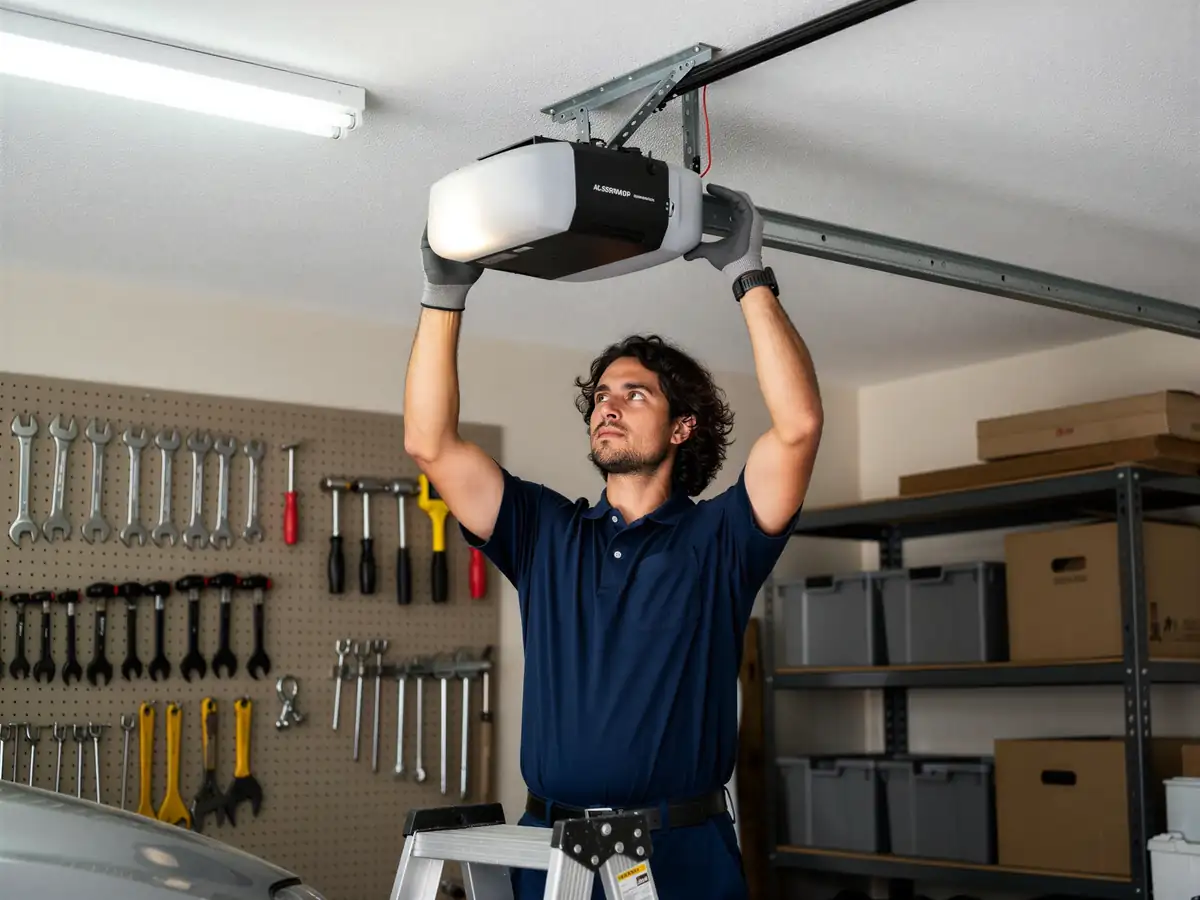
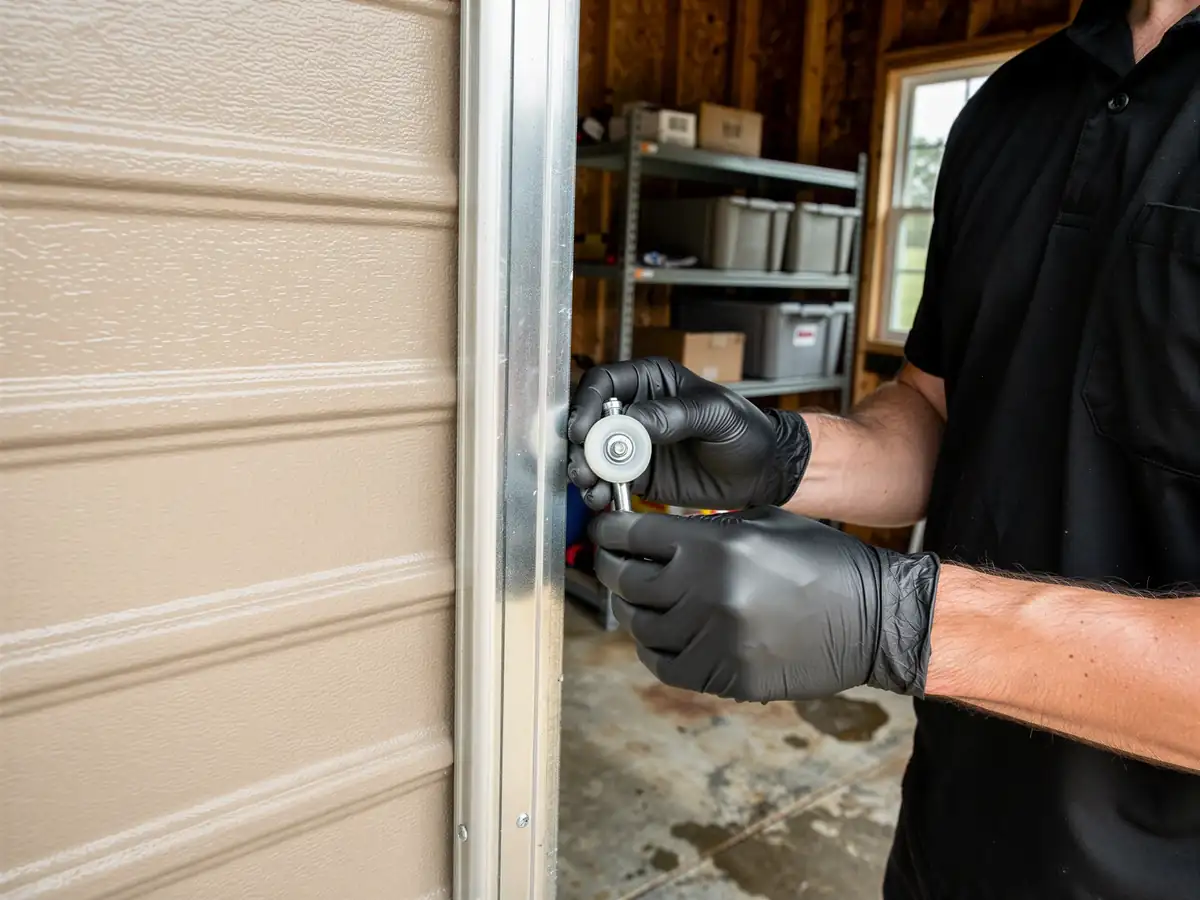
Last, look at the opener's travel limits. A lot of these doors have had the opener swapped at least once over the decades, but the track and rollers are frequently original, and worn rollers on an old track rattle loud enough that owners usually notice before we do.
What Local Conditions Do
Fairfield sits in a mild temperate band
Which is a break from places that fight hard freezes or heavy snow load. You won't see the kind of ice-driven cable snap or frozen track that cracks hardware in colder climates. That's the good news, and it's real.
What the mild climate doesn't spare you from is daily thermal cycling
A steel panel with no insulation core can swing forty-plus degrees in surface temperature between a sunny Central Valley afternoon and a cool evening, and it does that nearly every day of the year here rather than seasonally. On an uninsulated door from the 1938-2002 building window, that daily flex works the seams, the hinge fasteners, and the joint between panel sections. It's slower than a freeze crack, but it's constant, and on a forty- or fifty-year-old door, it shows up as loosened hinges and hairline gaps at the panel seams rather than a single dramatic failure.
Humidity swings matter too
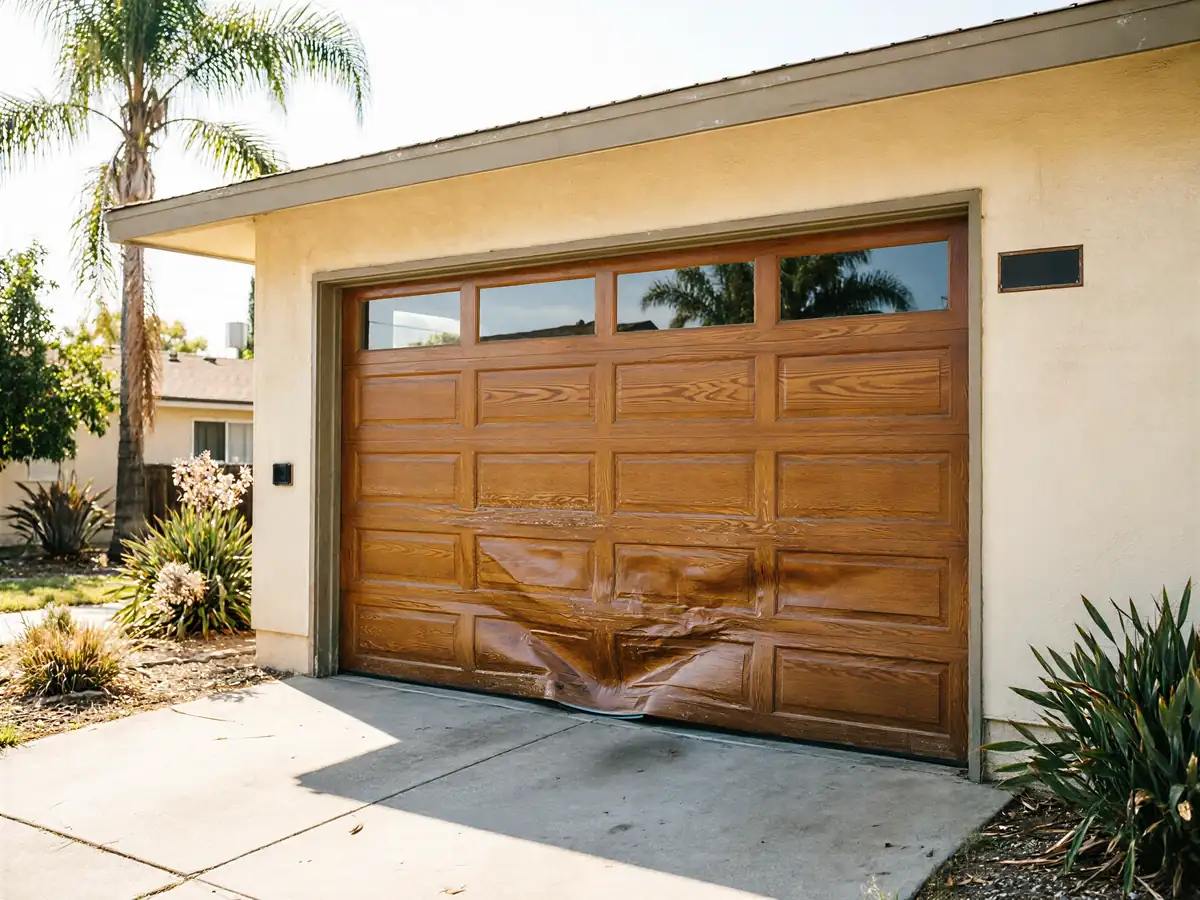
Without a vapor barrier, the inside face of an old panel can sweat on cooler mornings, and over decades that moisture cycle is what we usually find behind rust streaks at the bottom corners of original steel doors.
Season by Season
There's no deep winter here to plan around, so the seasonal pattern on an older Fairfield door is driven more by heat and dryness than by cold. Summer is the hardest stretch on hardware: long stretches of hot, dry afternoons bake the lubricant out of rollers and hinges faster than owners expect, especially on original tracks that have never been degreased and relubed. If a door starts groaning only in July and August, that's usually dried-out hardware, not a structural problem.
The wetter months bring the opposite issue. Moisture gets into any gap in the weatherstripping or bottom seal faster than owners notice, since there's no snowmelt drama to prompt a look - just quiet dampness along the bottom panel edge on houses with older, mismatched seals. On a house from the 1938-2002 build window, that's often the same bottom panel that's never been replaced, and rust starts at exactly that seam.
Spring and fall are the calm stretch, and they're the right time to do the lubrication and hardware check that summer heat and winter damp both punish you for skipping.
What Is Going On
Here's the honest part: a lot of what looks like a broken door on an older Fairfield house is really a mismatch between original 1960s-70s hardware and a modern opener bolted on top of it later. The spring is sized for the original panel weight, the opener is new, and the two were never matched by anyone who measured.
With median household income in the service area at $102,938, we see plenty of owners choosing full replacement over patch repair once a door is into its fourth or fifth decade - insulated panels pay for themselves on comfort even before you count the daily thermal cycling this climate puts a door through. We won't push that choice on every call. If the spring, track, and panel are sound, a repair is the right answer and we'll say so.
Where we're limited: hardware sized for some of the oldest panels in the 1938-2002 range isn't something we keep on every truck, since original mounting brackets and track widths vary house to house even within the same neighborhood. On those jobs, expect us to confirm measurements before we quote a repair, not after.