Serving Fairfield, CA & nearby
(707) 213-3692
Fairfield, CA

Why Your Garage Door Jumps the Track

Fairfield homes built between 1938 and 2002 run older track and roller hardware. Here's what actually knocks a door off its rails and how our mild climate factors in.

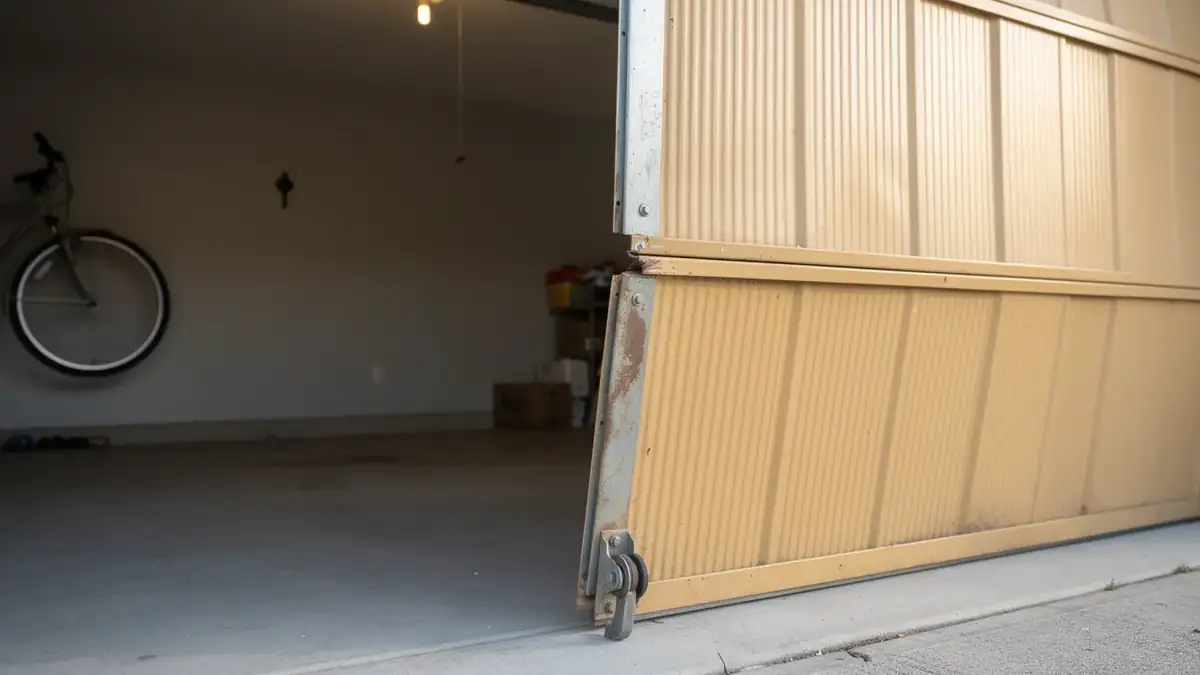
The tan garage door is off its track, with a wheel visible at the bottom.

What to Check

Before you call anyone, look at the track itself. Stand inside the garage with the door down and run your eye along both vertical rails from the floor up to where they curve into the horizontal section. A door that's off track usually shows a visible gap between the rollers and the rail on one side, or the bottom panel sits crooked instead of flush with the floor.

Check the rollers next. On houses in this area built from the late 1930s through the early 2000s - median build year 1979 - you'll find a mix of steel rollers on older track and nylon rollers on anything replaced more recently. A worn or chipped roller walks out of the channel under load, especially on the cycle where the spring is doing most of the lifting.

Look at the bottom brackets too. These take a hit if a car bumps the door or if a cable comes loose on one side and lets the bottom corner drop. A bent bracket pulls the roller at an angle into the track, and that's often the actual cause people mistake for a track problem.

One limitation worth saying plainly: if the track itself is bent rather than just knocked loose, bending it back rarely holds. Replacement track is usually the honest call there, not a quick straighten-and-go.

What Local Conditions Do

  1. Fairfield sits in a mild temperate band

    Which works in your favor compared to places with hard freeze-thaw cycles or extreme humidity swings that warp wood jambs. We don't see the kind of seasonal expansion that pushes track brackets out of alignment the way it does in colder climates.

  2. What we do see across the 19 named areas in the service territory is hardware fatigue tied to age rather than weather

    A lot of the housing stock here dates to the 1960s and 70s, and track brackets from that era were fastened with lag screws into jamb wood that's now had five or six decades to dry out and loosen its grip. The track doesn't move because of heat or cold - it moves because the screws holding it to the frame have backed out a sixteenth of an inch at a time for years.

  3. That's a different repair than what you'd diagnose in a region with real winters

    Here, the fix is almost always re-anchoring the bracket into solid wood or swapping to a bracket position that misses the old screw holes entirely, not chasing seasonal movement that doesn't really happen in this climate.

Season by Season

Because the climate here stays mild year-round, you're not dealing with the big seasonal swing in call volume that colder markets see every November and March. What changes instead is usage pattern. Summer months mean more trips in and out for yard projects and more dust working into the track, which on older steel track from 1960s and 70s-era homes can gum up the roller path enough to cause a hop.

Winter in this part of California brings rain, not ice, and rain means water tracking in off car tires and pooling at the base of the track where it meets the slab. That moisture speeds up corrosion at the bottom few inches of track on houses old enough to still have original galvanized rail - which, given a median build year of 1979, is a fair number of them.

So the seasonal advice here isn't about temperature extremes like you'd write for another climate. It's narrower: clear dust out of the track in the drier months, and keep the bottom foot of rail free of standing water in the wetter ones. Both are small habits, and both matter more here than a generic seasonal checklist would suggest.

What Is Going On

Put the three pieces together and most off-track calls in this service area come down to the same combination: hardware that's been in place since the 1960s-70s building wave, fasteners that have slowly worked loose in dried-out jamb wood, and a mild climate that hides the problem instead of forcing it to the surface the way freeze-thaw would elsewhere.

A door doesn't usually jump the track in one dramatic moment. It walks a little further out of alignment each month until a roller finally clears the rail edge. By the time you notice the door scraping or binding, the bracket has often been loose for a while.

Across the roughly 46,420 owner-occupied houses in this area, the ones built closest to that 1979 median are the ones we see this on most. Newer construction toward the later end of the 1938-2002 range tends to have deeper-set screws and holds up longer before the same issue shows up.

The honest answer, if you're asking whether this is a quick fix: re-anchoring a bracket is usually a short job. If the track is actually bent or the roller channel is worn oval from age, that's a parts swap, and it's worth doing right rather than forcing the old rail back into shape.
How it works

From “it’s stuck” to “it’s fixed”

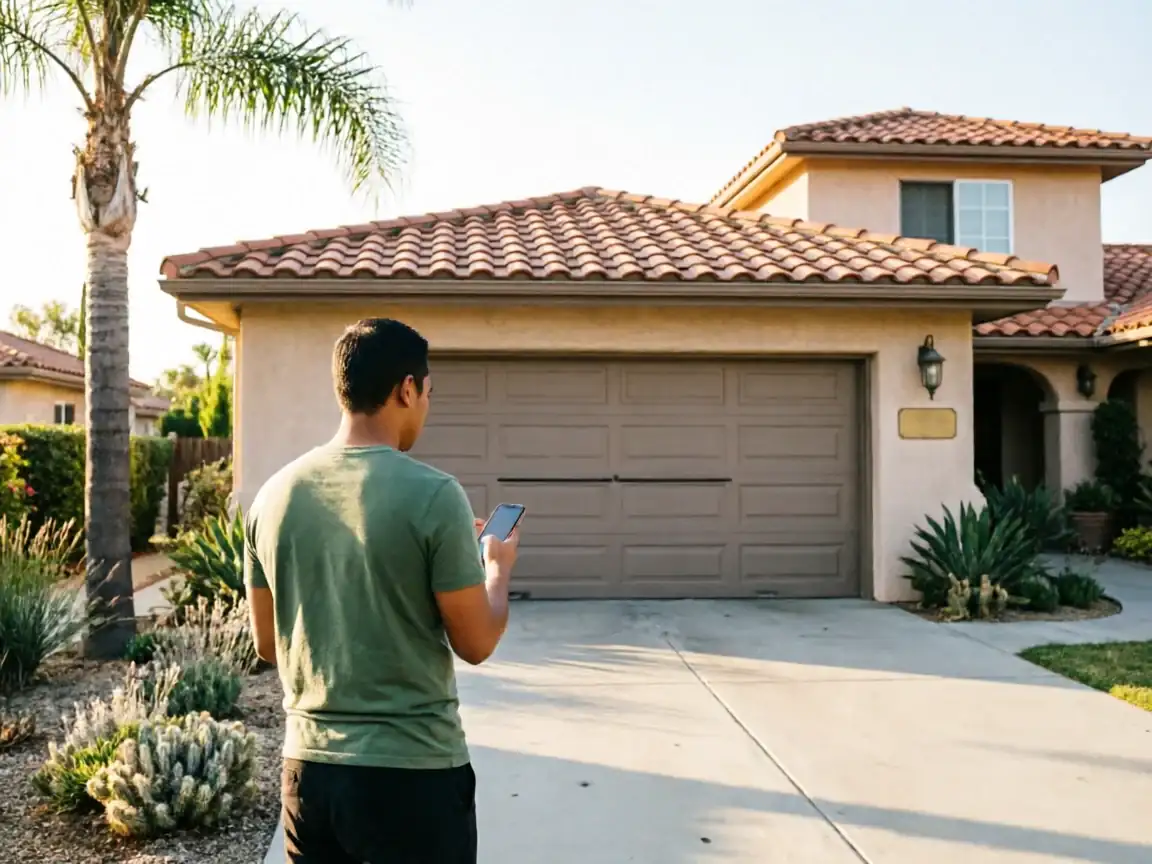
A man stands in a driveway, looking at his phone in front of a house.

Tell us what’s wrong

Describe the symptom - won’t open, loud bang, opener runs but the door won’t move.

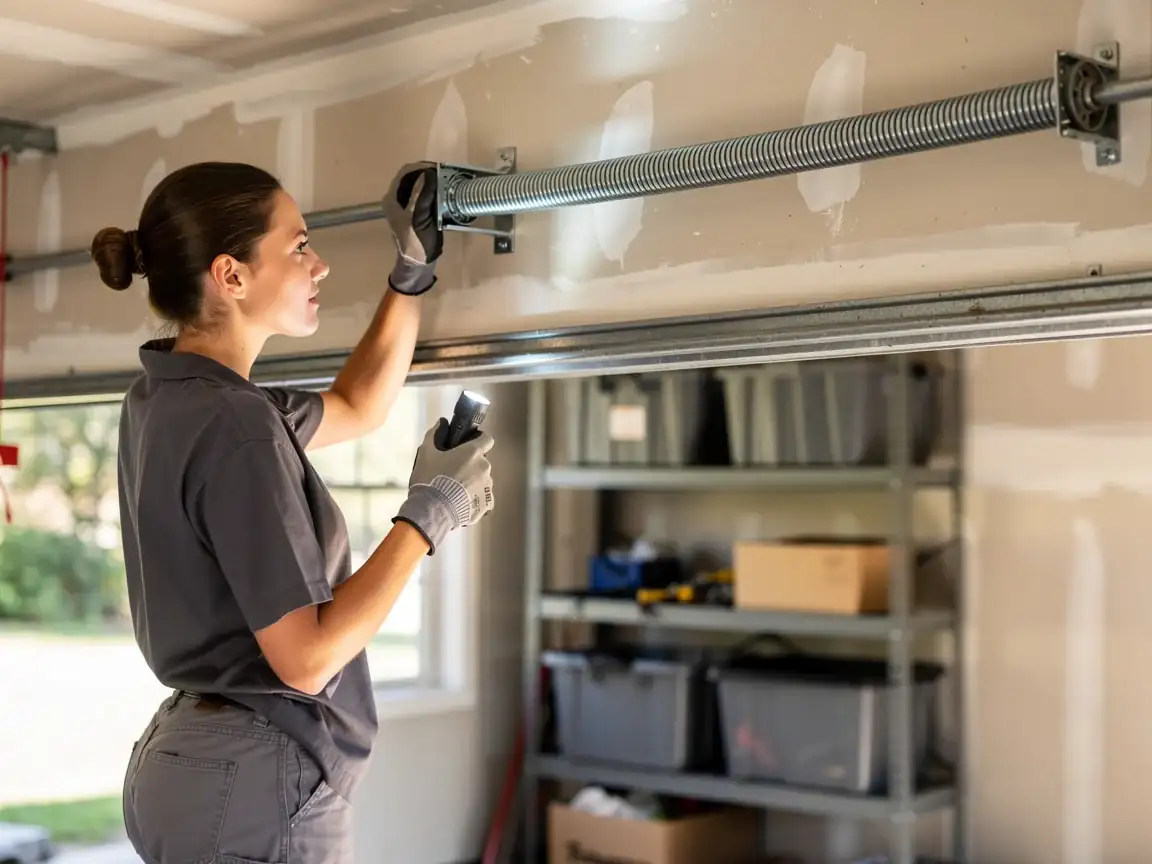
A technician in gloves holds a flashlight while working on a garage door torsion spring.

On-site diagnosis

A technician tests the door under power and by hand and finds what actually failed.

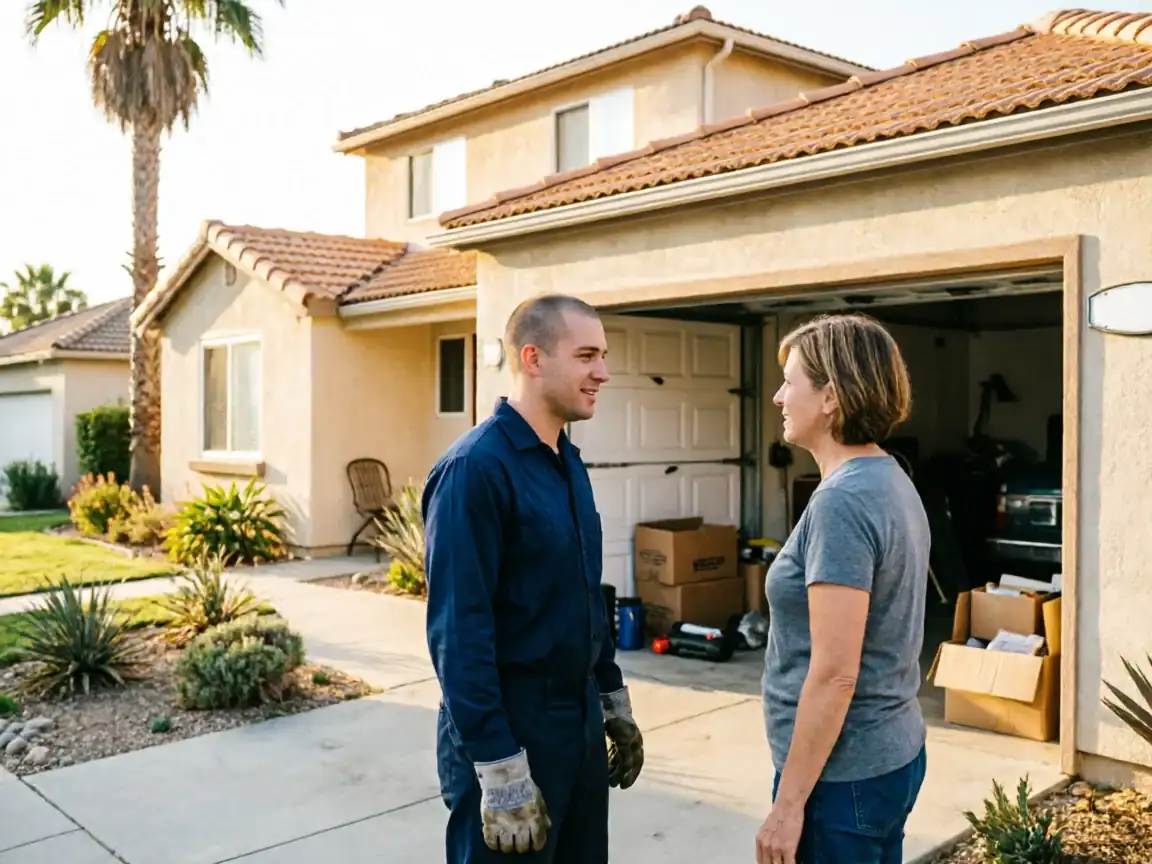
A technician in a blue uniform talks to a woman in front of a house.

Clear, up-front plan

You get the fix that’s needed and what drives the cost - before any work starts.

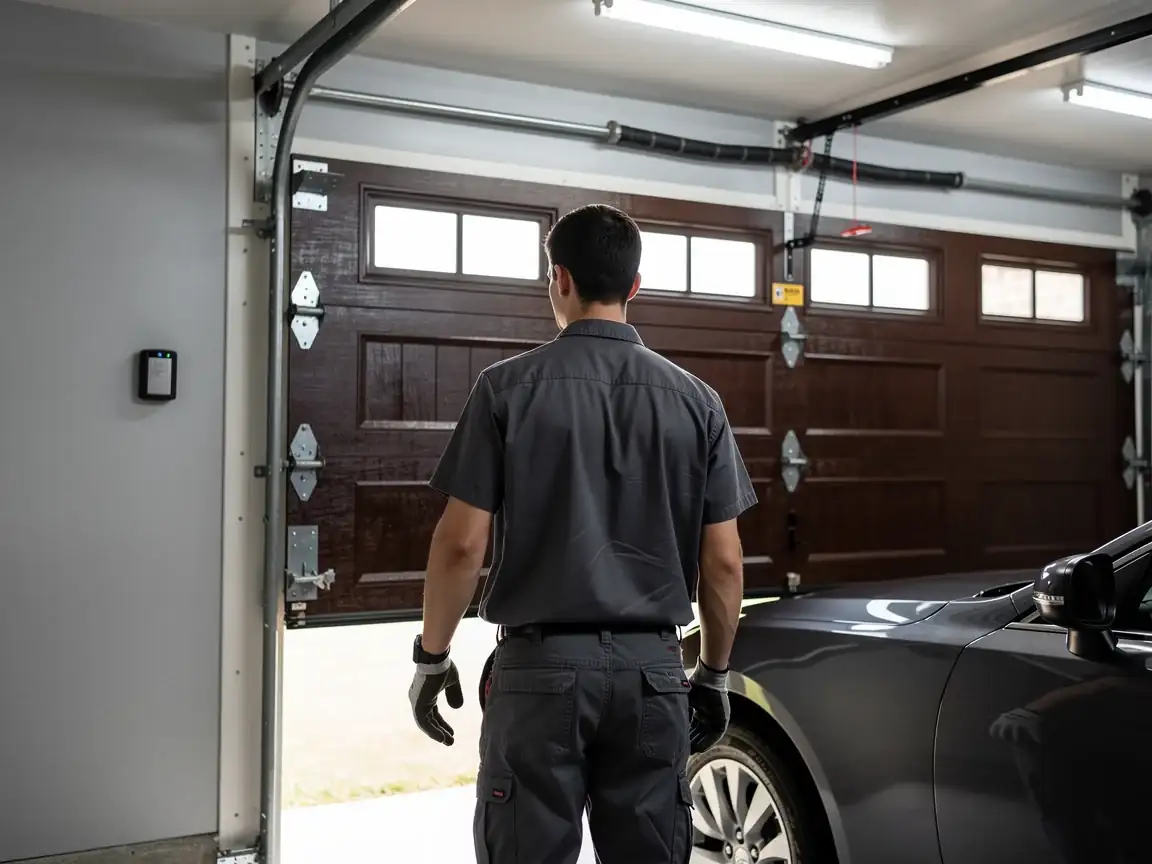
A technician stands in a garage looking at a brown garage door with windows.

Repaired & tested

The repair is done, the door is set true and tested, and the work area left clean.

Not sure which repair your door needs in Fairfield, CA? Describe what it’s doing - every job starts with a diagnosis.

How we work

What to expect

Diagnosis first

Every visit starts by finding what actually failed - not a pre-written parts list.

The right part for the door

Springs and openers matched to the door’s weight and age, so the fix holds up.

Straight answers

When a repair makes more sense than a replacement - or the reverse - you hear it plainly.

Clean, careful work

Tension released safely, hardware set true, the door tested under power before we leave.

What we do

Garage Door Services

Repair and installation work for Fairfield homes and businesses.

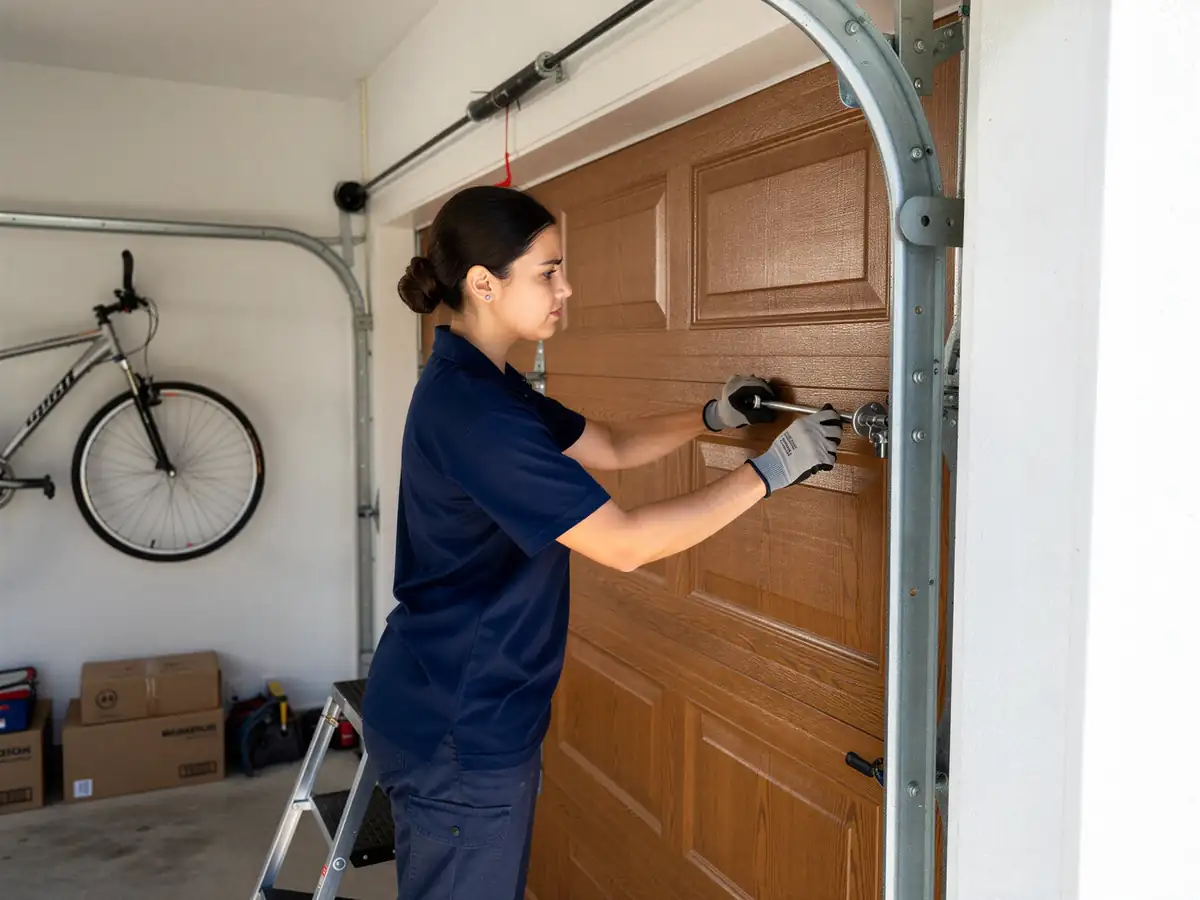
A technician adjusts a brown garage door with a tool.

Garage Door Repair

Fairfield Garage Door Pros fixes springs, openers, and tracks on the 1938-2002 housing stock common across Fairfield's 19 neighborhoods. Same service area, local know-how.

Learn more
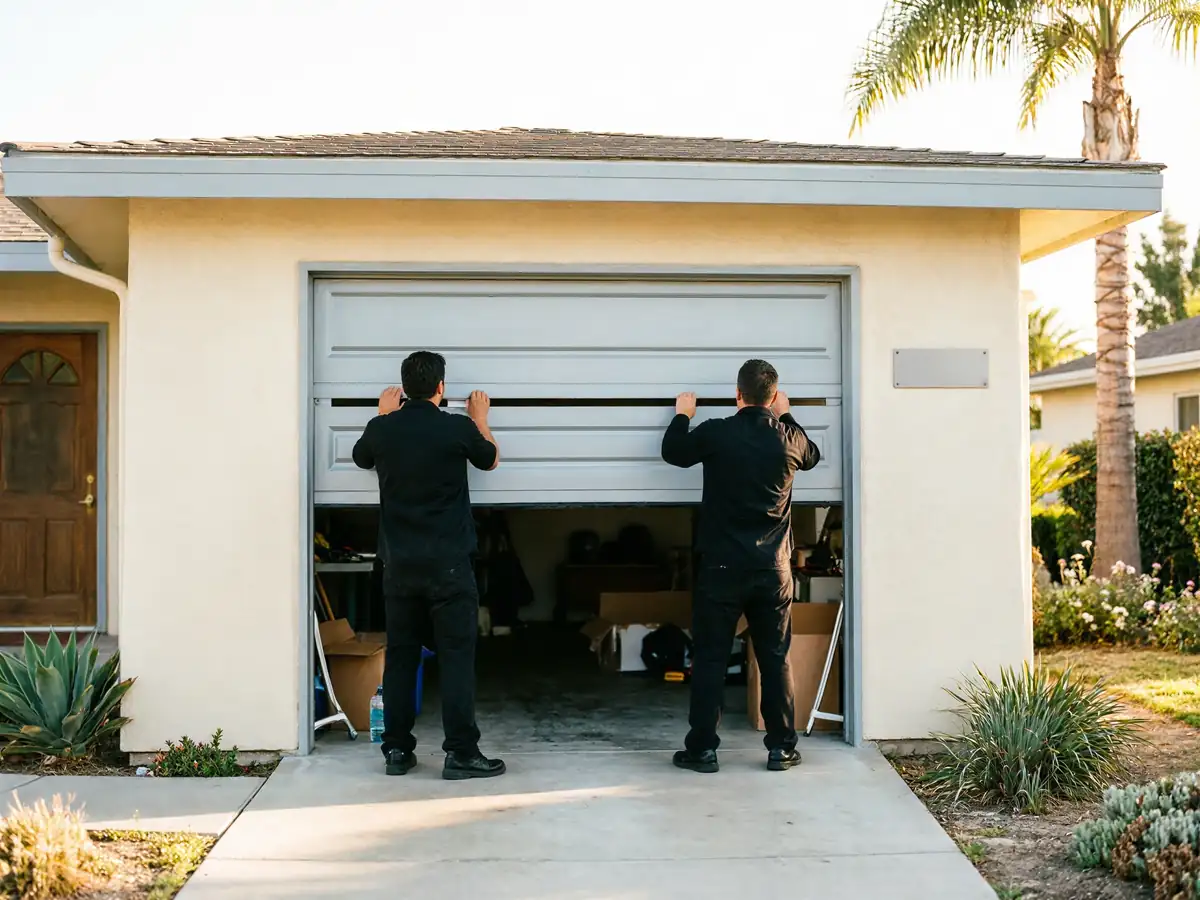
Two technicians are opening a gray garage door on a house.

Garage Door Installation

Fairfield homes built between 1938 and 2002 often need non-standard track and header work. We install doors sized for this area's actual housing stock, not a generic box kit.

Learn more
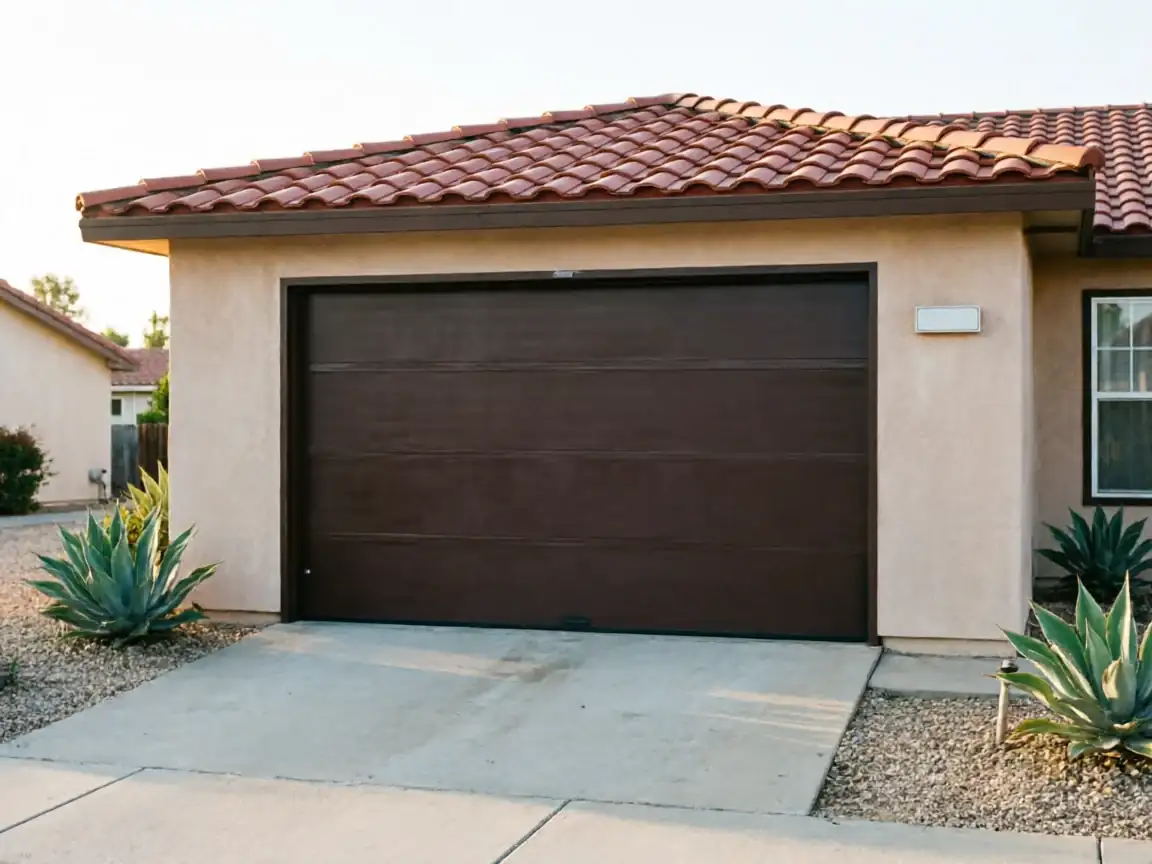
A brown garage door is on a stucco house with a red tile roof.

Garage Door Service

Fairfield Garage Door Pros fixes broken springs, openers, and tracks on homes built 1938-2002 across Fairfield, CA. Straight talk on parts, timing, and cost.

Learn more
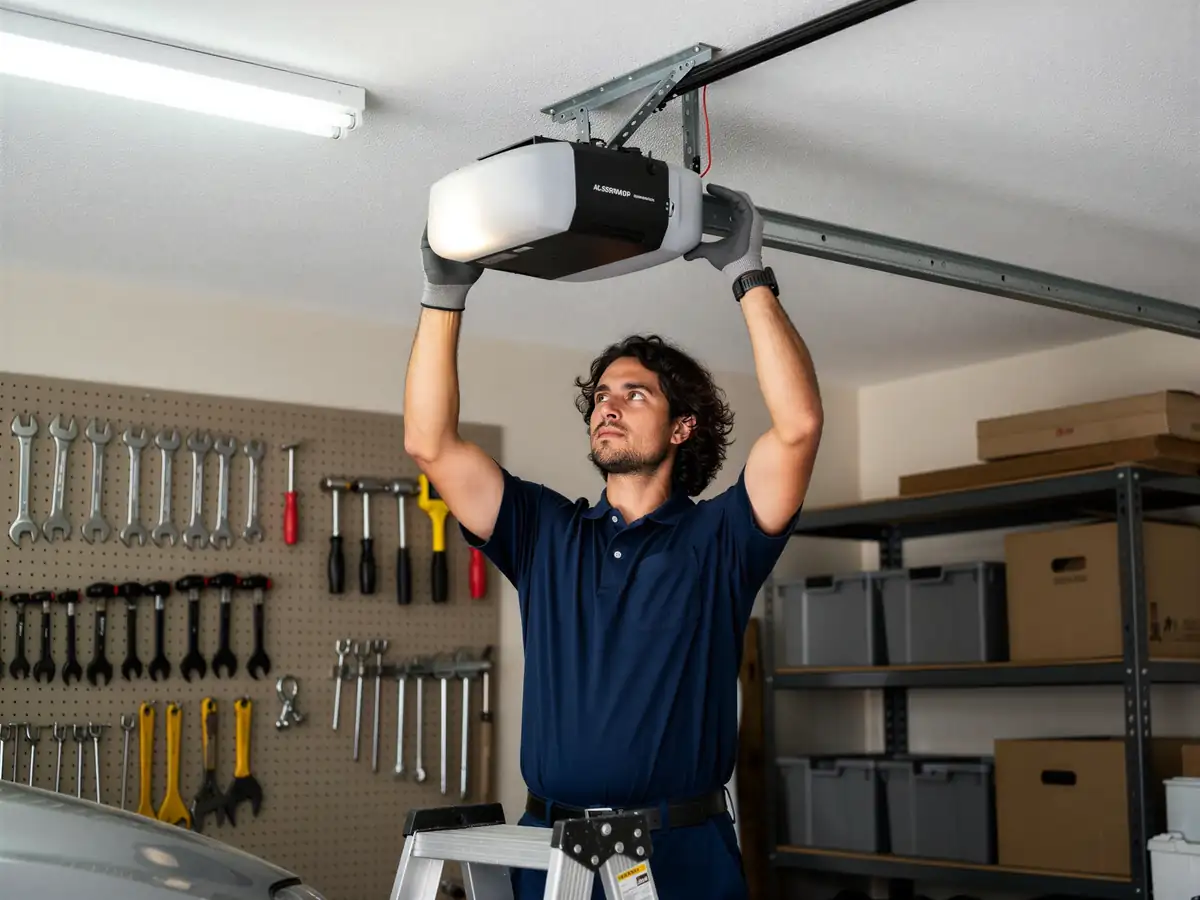
A technician on a ladder installs a garage door opener.

Opener Installation

Opener installation and replacement for Fairfield homes built between 1938 and 2002 - matched to your track, door weight, and the mild Bay Area climate.

Learn more
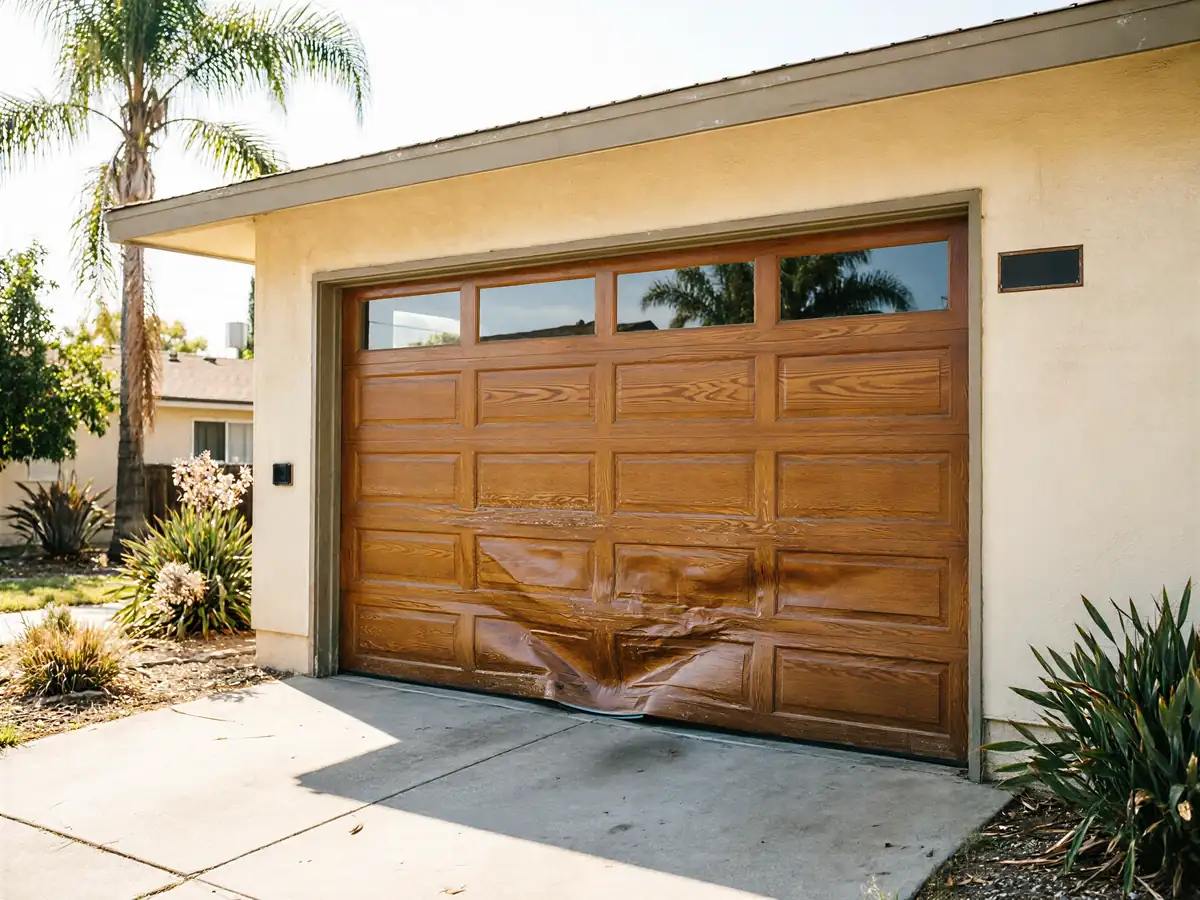
A damaged brown garage door with windows is on a tan house.

Panel Replacement

Dented or cracked garage door panel in Fairfield? We match steel and aluminum panels on 1970s-era sectional doors common across this service area. Call for a look.

Learn more
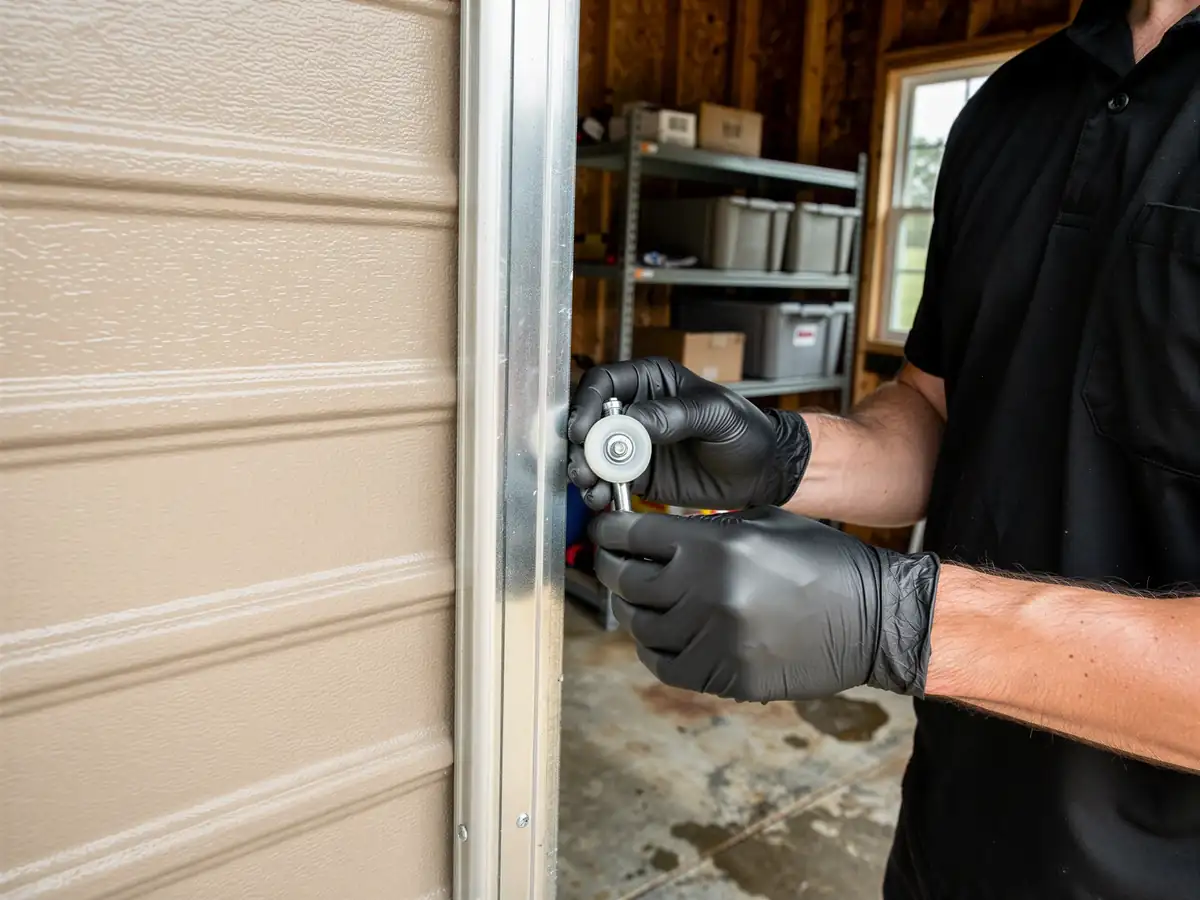
A technician in black gloves holds a garage door roller next to a beige garage door.

Roller Replacement

Roller replacement for Fairfield-area garage doors, covering 1960s-70s stock through newer builds, with what drives roller failure and what the job actually costs here.

Learn more
A technician in a gray shirt is working on a garage door panel.

Maintenance

Garage door maintenance for Fairfield homes built mostly in the 1960s-70s era, where original hardware and mild coastal air wear differently than newer doors.

Learn more
A technician adjusts a beige garage door with a spotlight on the floor.

Emergency Garage Door Repair

Fairfield Garage Door Pros fixes broken springs, stuck doors, and dead openers across Fairfield's older housing stock. Call for same-day emergency repair.

Learn more
Questions

Frequently asked

Straight answers about garage door repair in Fairfield. Still unsure? Ask us directly.

My door looks fine but one roller keeps popping out, why?

That's almost always a loose bracket, not a bad roller. On houses from the 1960s-70s building wave common in this area, the lag screws holding the bracket to the jamb loosen over decades of normal cycling. The roller has nowhere stable to sit, so it walks out under load. Re-anchoring the bracket into solid wood usually solves it without replacing the roller.

Does the rain we get in winter actually damage the track?

It can, at the bottom section. Water tracked in off car tires collects at the base of the rail where it meets the slab, and on original galvanized track from older homes that corrosion eats into the metal over years. It's a slower issue than freeze damage elsewhere, but it adds up on houses old enough to still have their original rail.

Is a bent track worth straightening or should I replace it?

If it's bent more than slightly, straightening rarely holds - the metal has a memory and it walks back out of alignment within weeks. We'll generally recommend replacing that section of track rather than charging you for a repair that doesn't last.

Ready to get your garage door sorted?

Tell us what it’s doing and where you are in Fairfield - we’ll take it from there.

8Services offered
7Areas covered
Diagnosisfirst, then the fix
Request a QuoteCall