What You Pay
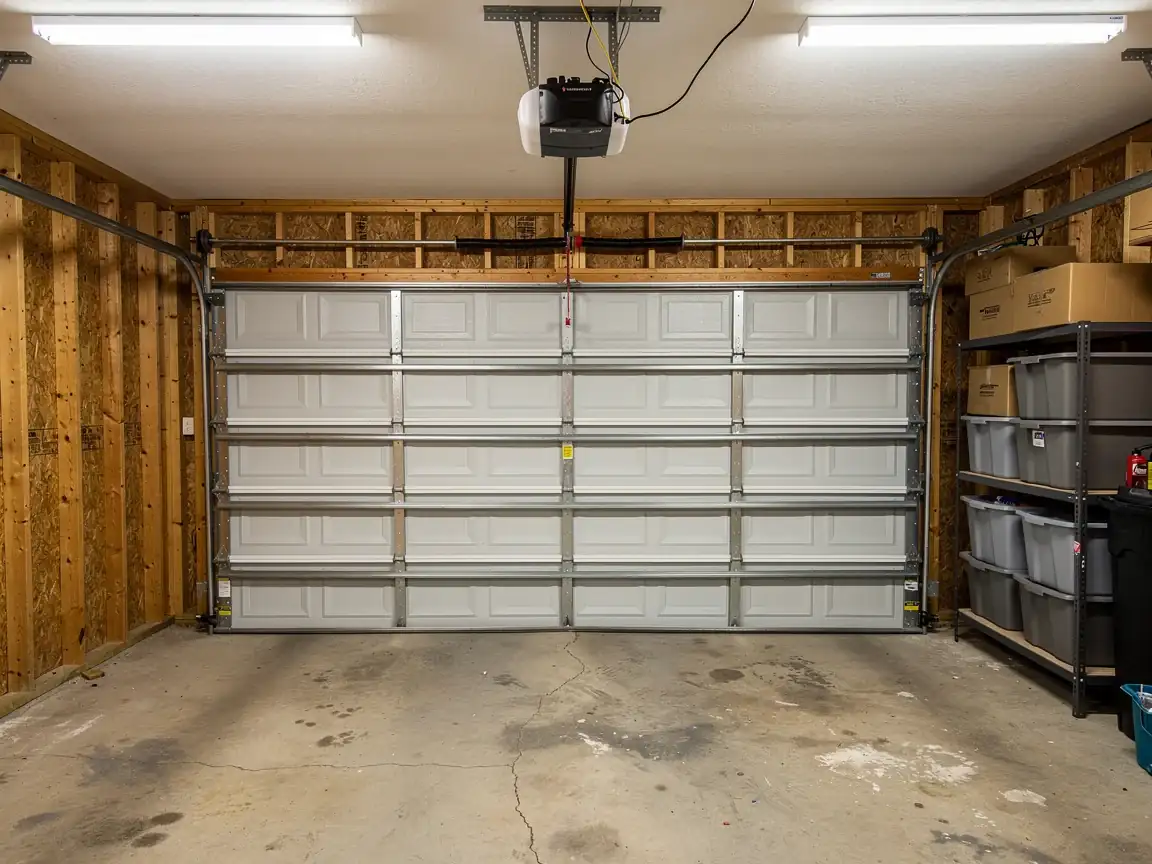
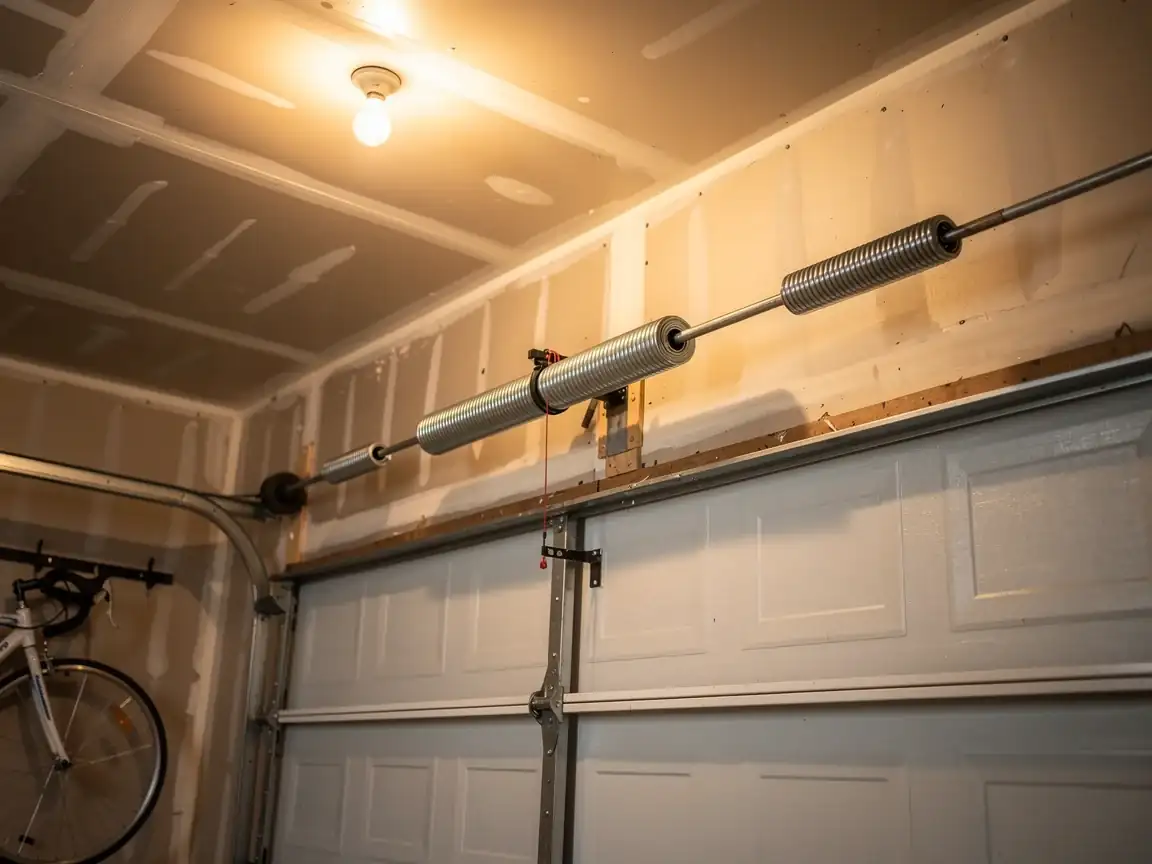
What a repair costs in Pittsburg comes down to what's actually broken, and that's shaped by when the house went up. With a median build year around 1982, a lot of garage doors here still run on extension springs stretched along the horizontal track rather than a torsion bar over the opening. Extension spring sets are cheaper parts than torsion conversions, but if both springs have gone and the cable pulleys are rusted from age, a repair starts to add up fast against the cost of replacing the whole operating system.
Pittsburg's median household income of $101,099 sits close to the wider service area's $102,938, so most homeowners here are weighing a real decision: patch the extension springs again, or move to torsion hardware that lasts longer and is safer under tension. We won't quote a number without seeing the door - what's on the wall in a 1982 house varies more than people expect, even block to block. We'll tell you straight whether a repair is worth doing or whether you're better off letting the door go.
The Complications
We run this call from Fairfield, 18 miles out
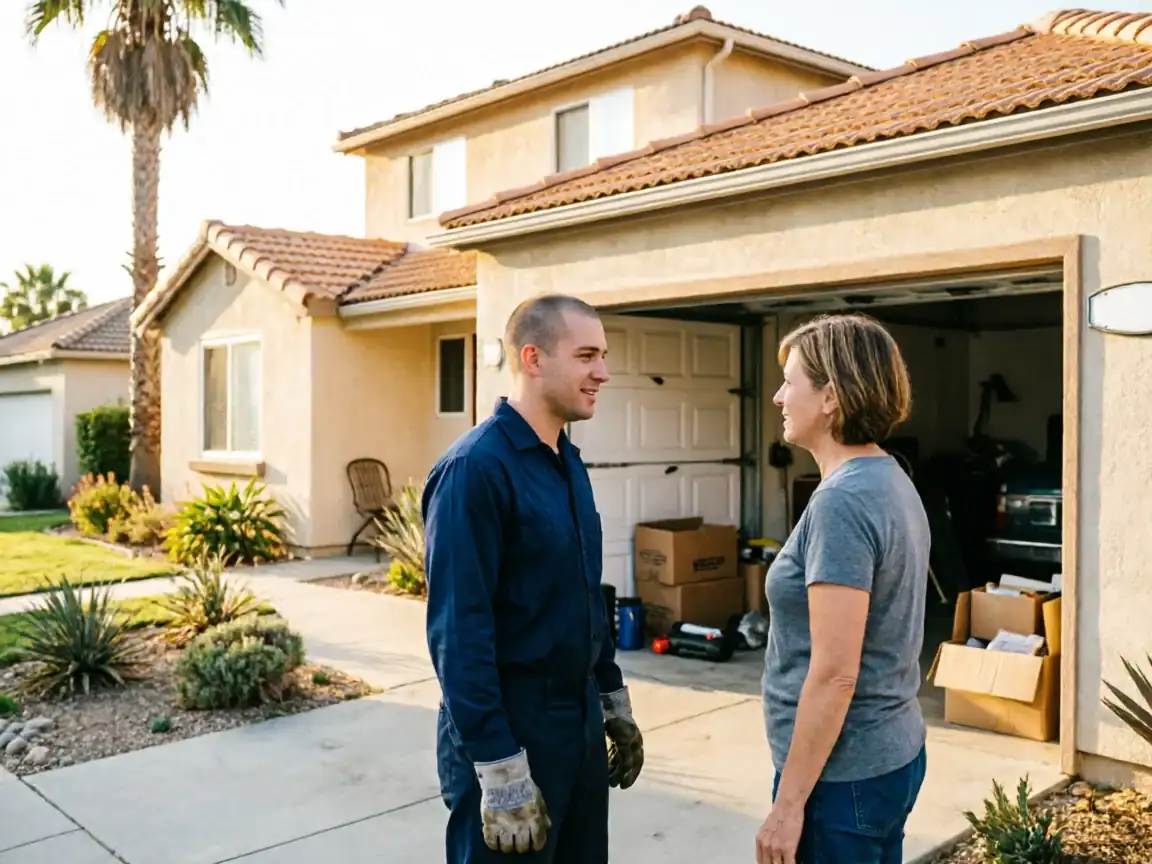
That's not a problem for the work itself, but it means we don't keep a crew idling in Pittsburg waiting on same-day calls, and we're upfront about that rather than promising a window we can't hold to every time. Jobs here get scheduled around the route, not dispatched from around the corner.
- 18 miles
The bigger complication is usually the house, not the distance
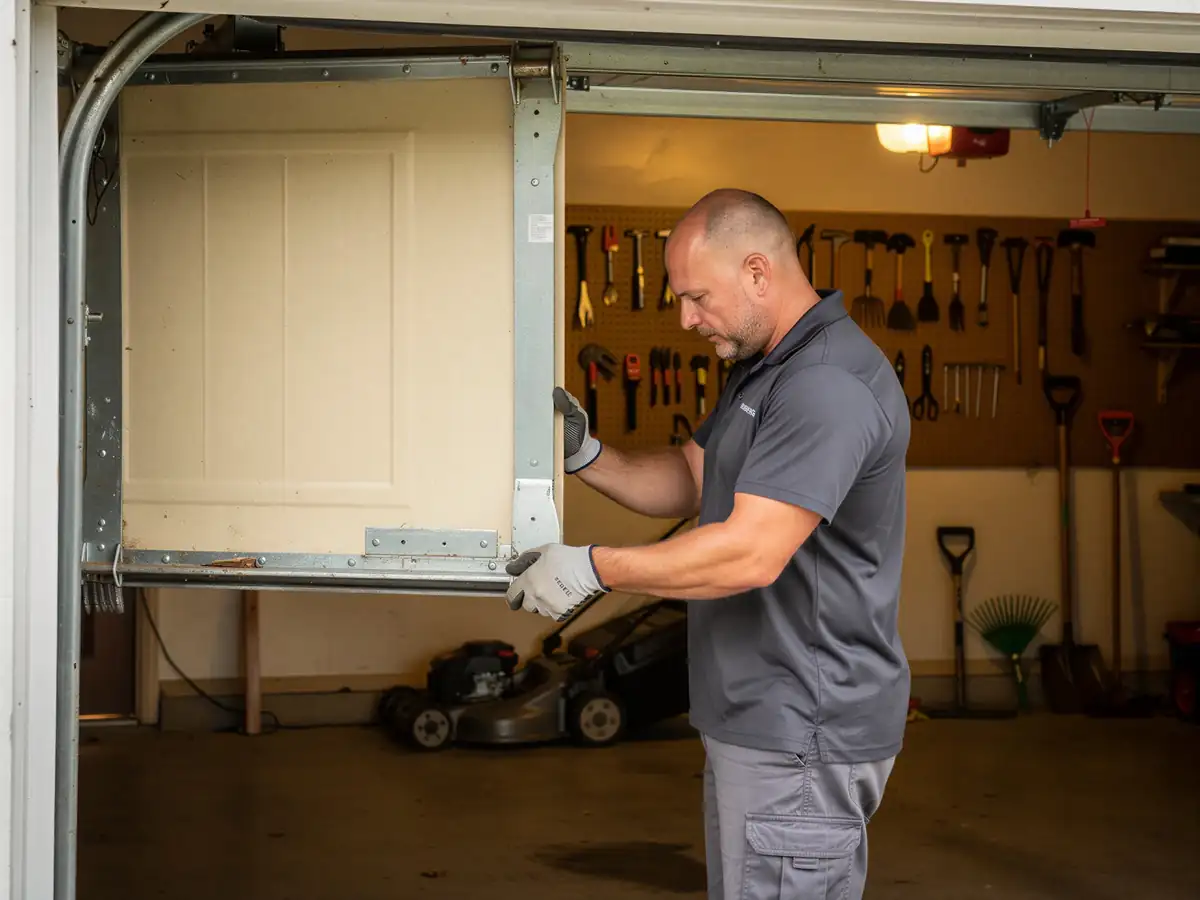
Early-1980s construction across this area used a narrower range of door and track widths than what you see in newer builds, and replacement hardware for those older extension-spring setups isn't always a shelf item anymore. If your door was never upgraded - still running the original steel panels and galvanized springs from when the house was framed - sourcing the right length spring or matching roller can take an extra call before we're back with the part. We'd rather tell you that up front than show up twice.
What You Are Seeing
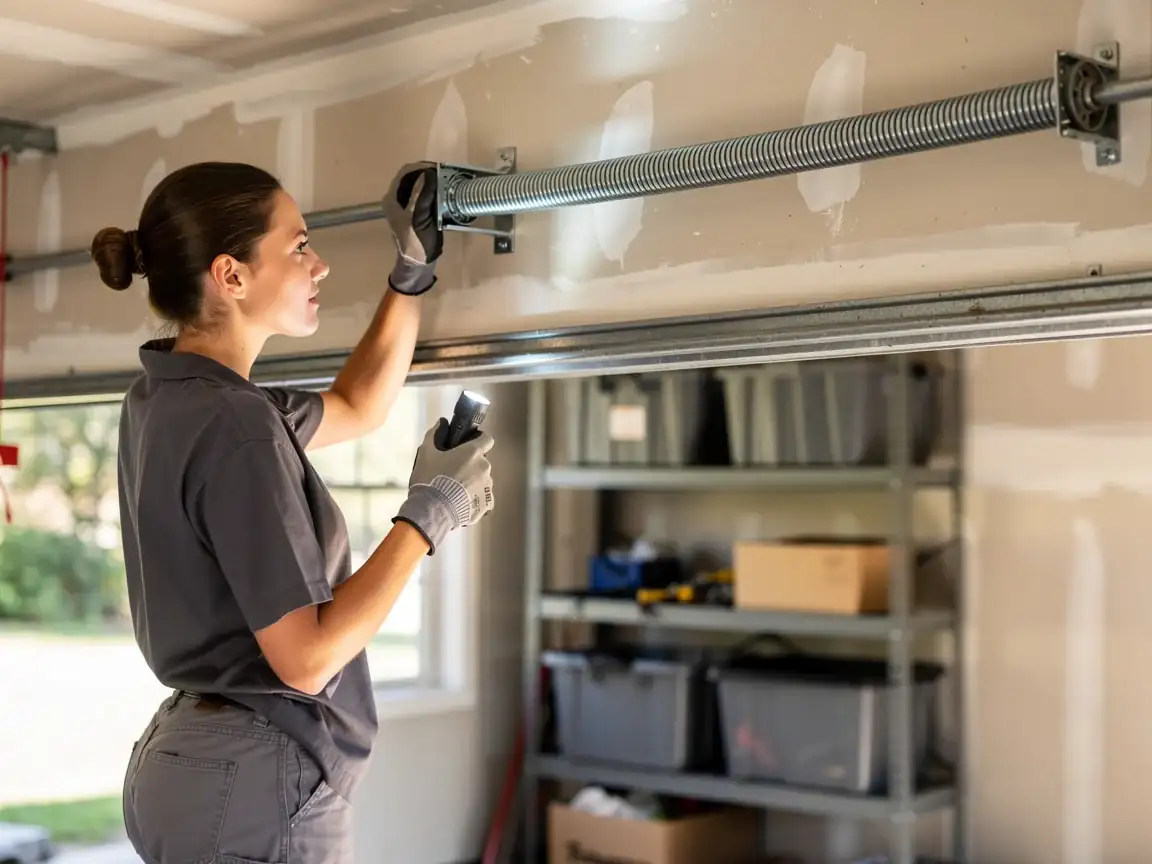
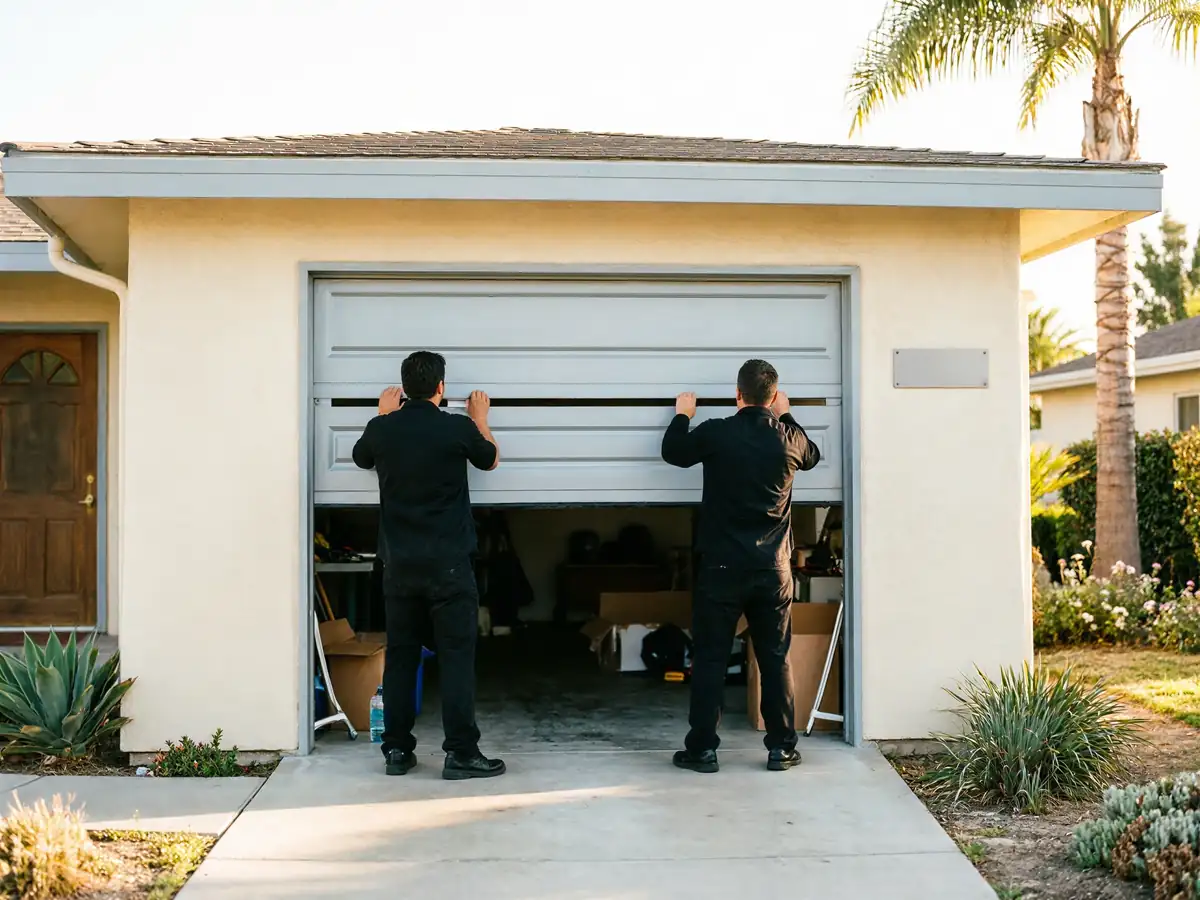
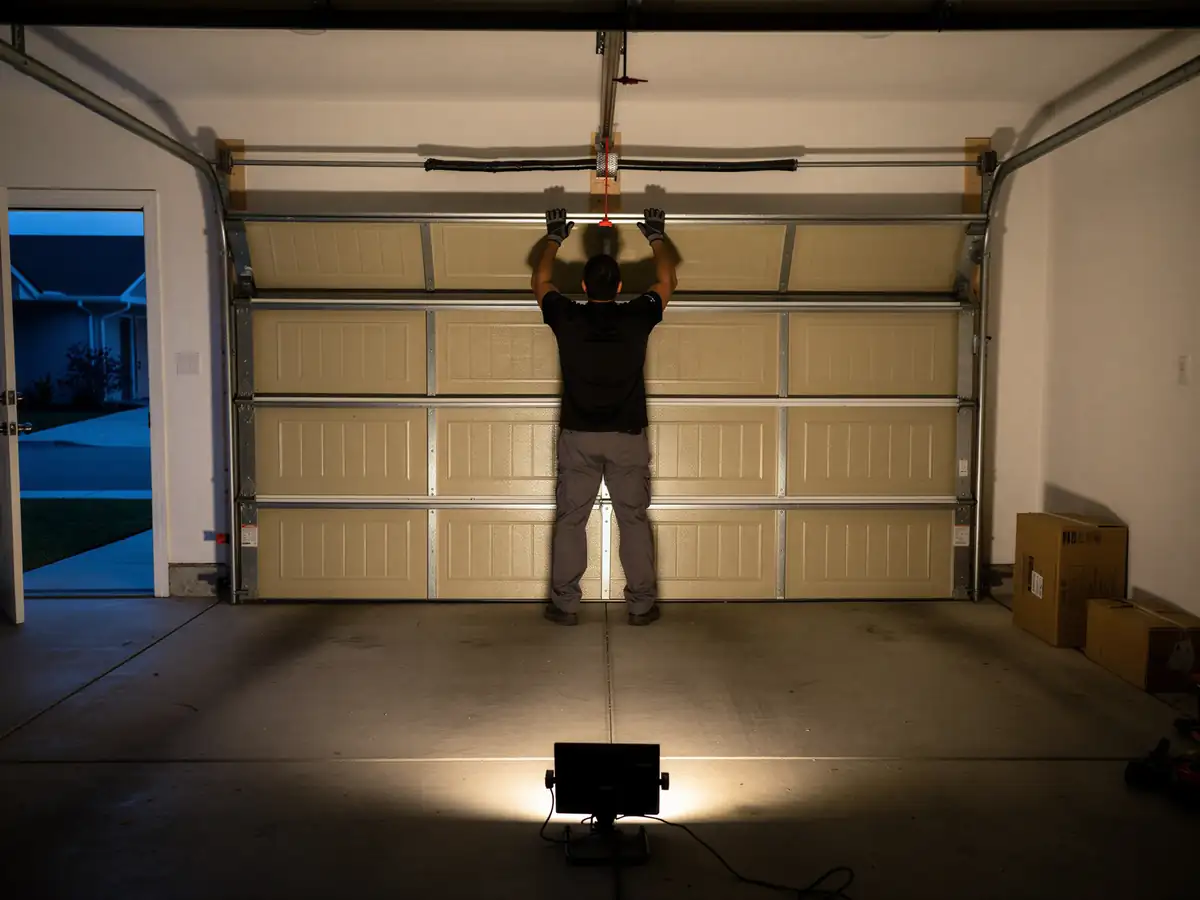
A door that slams the last foot instead of settling is usually telling you the extension springs have lost tension, which is common once a system from the early 1980s passes the forty-year mark. A door that won't stay up on its own, or that someone has to muscle up by hand, points the same direction - weak or snapped springs, not a dead opener.
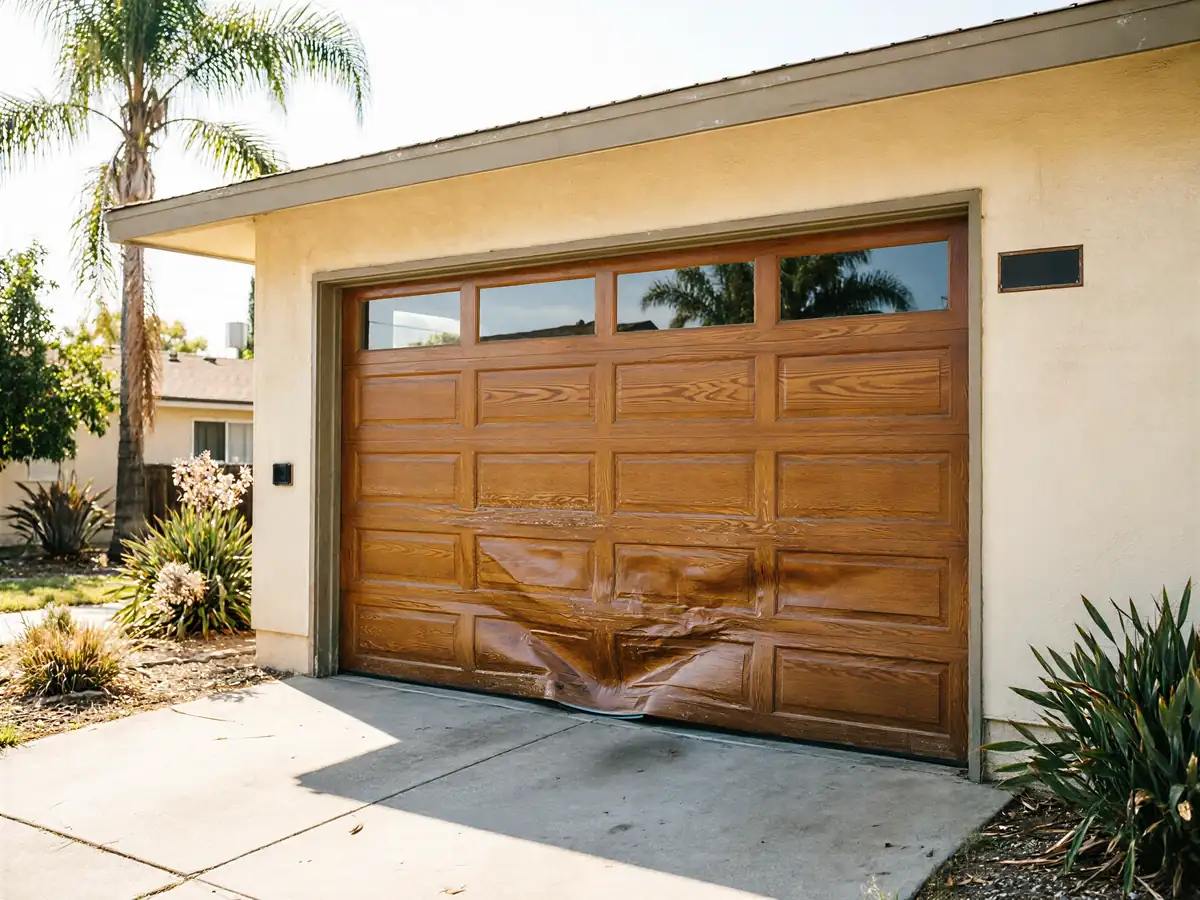
Rust streaks on the horizontal track or on the spring coils themselves are something we see more in Pittsburg's older stock, even though the climate here is mild rather than harsh. It's less about weather and more about age - galvanized coating wears thin over decades of daily cycling. A panel that's started to bow or dent along the bottom section is often the original steel door, never swapped, just worn.
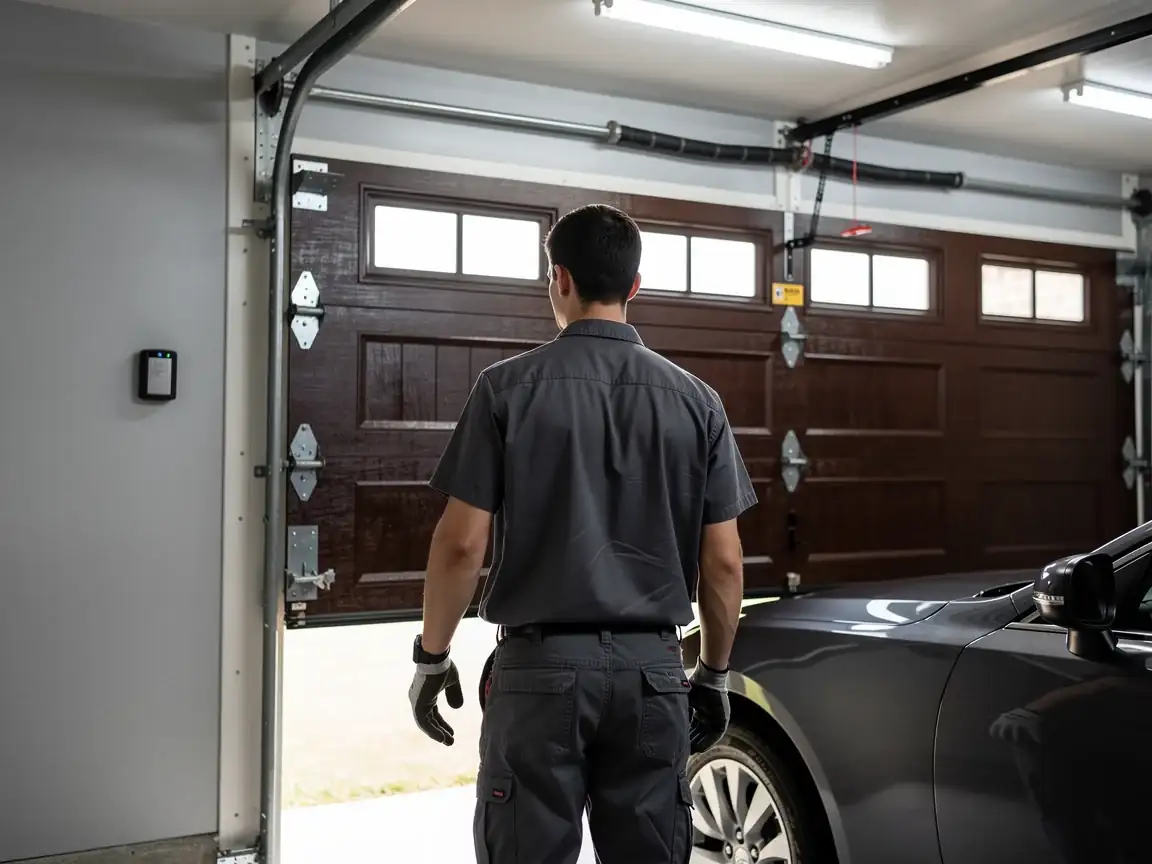
If your opener reverses unevenly or the door travels crooked in the track, that's usually a cable or roller issue tied to the same aging hardware, not the motor. We check the whole system before we touch the opener, because replacing a motor on a door that's mechanically tired just moves the next failure down the road a few months.
Parts We Carry
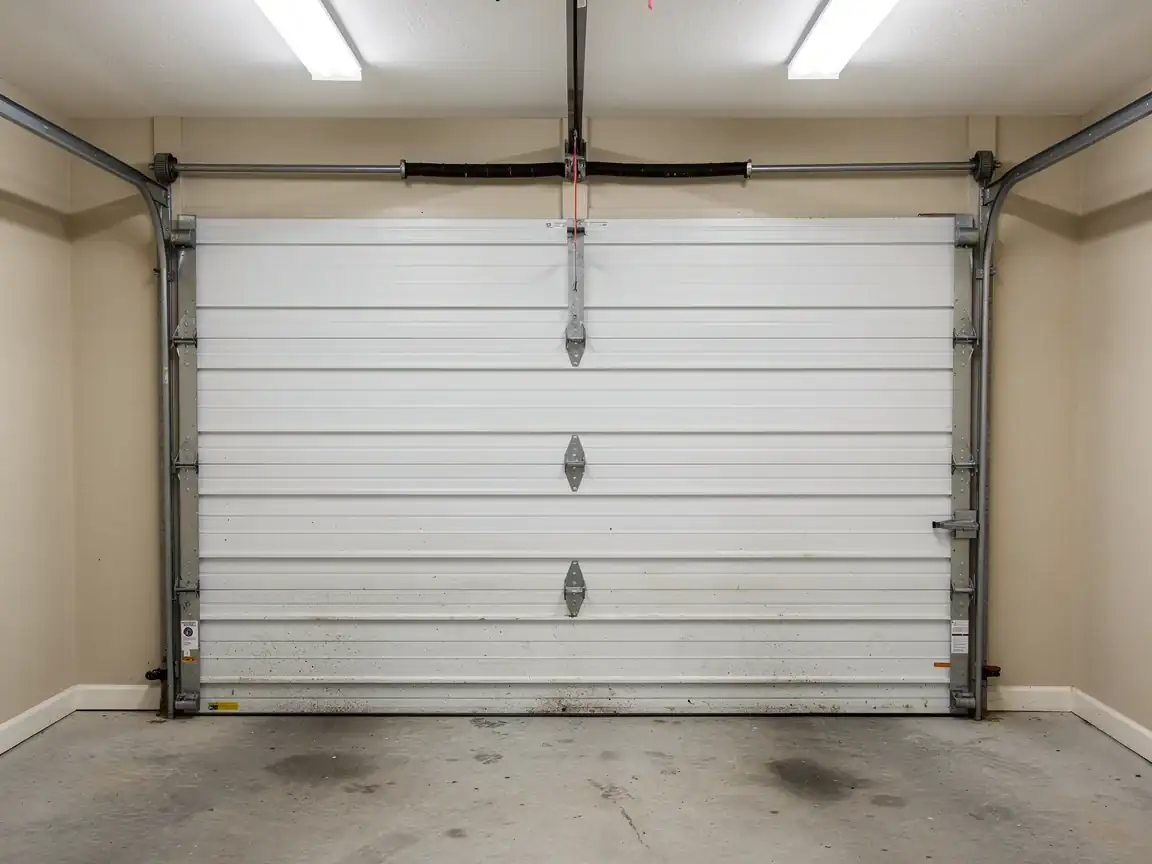
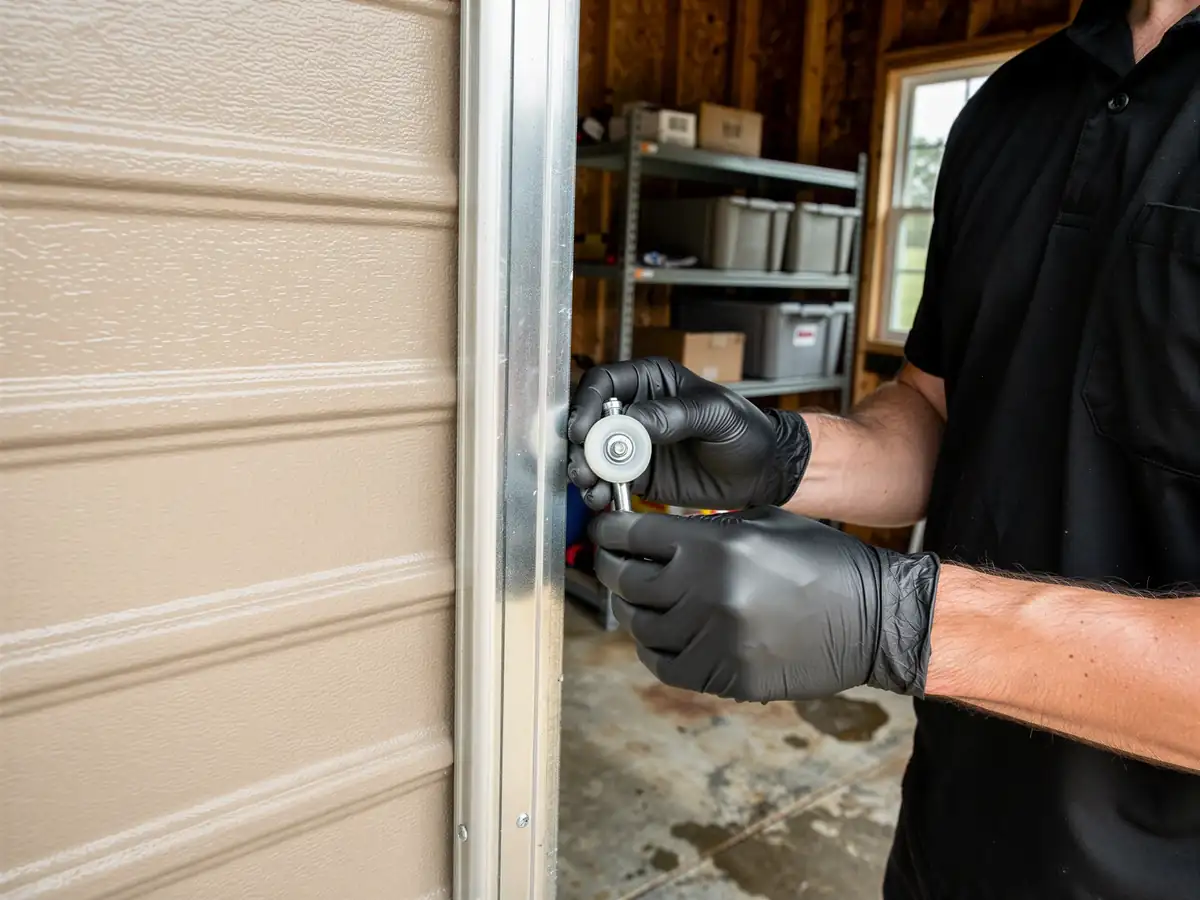
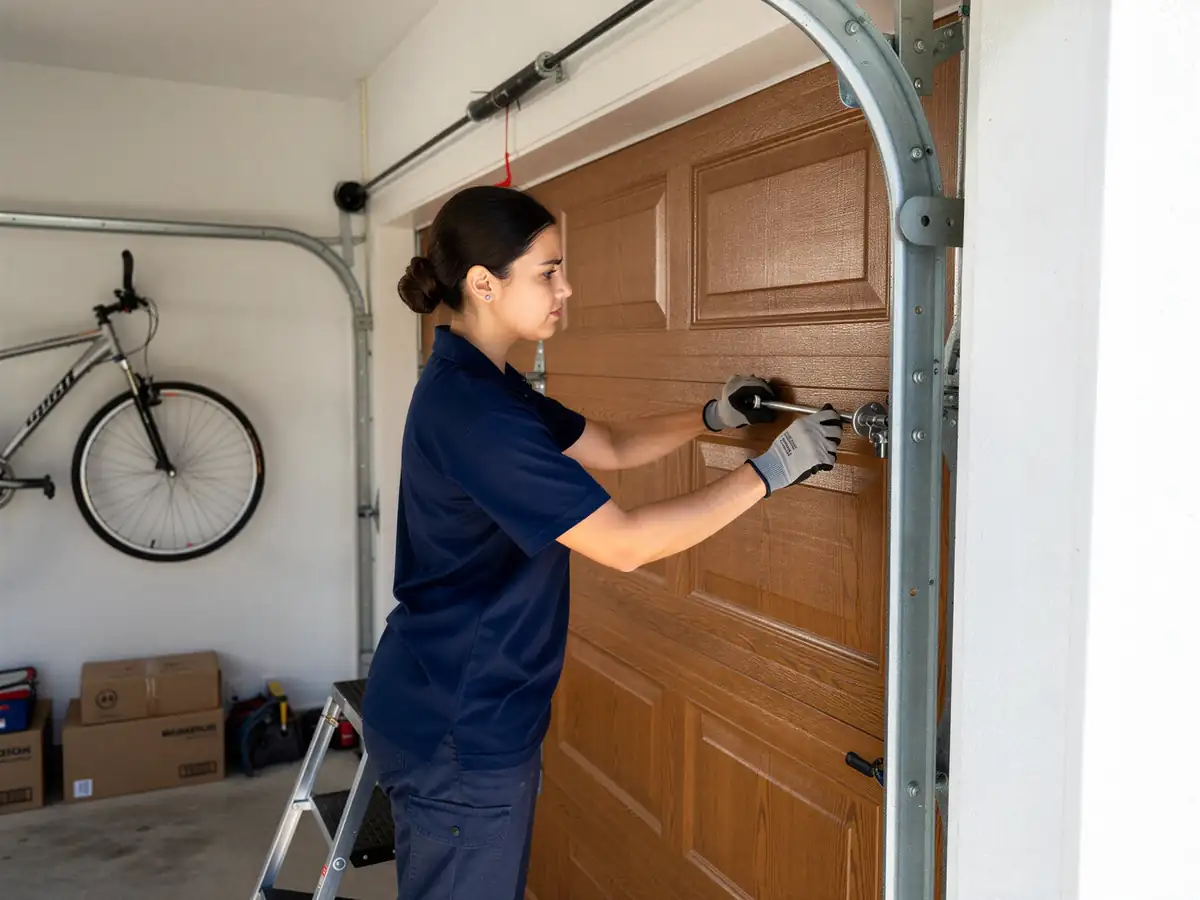
For the extension-spring systems common on Pittsburg's early-1980s doors, we carry standard spring sets, replacement cables, and galvanized rollers on the truck, along with the pulleys and safety cables that a lot of older setups are still missing. If a homeowner wants to move off extension springs to a torsion bar, we carry conversion hardware too, though that's a bigger job than a spring swap and we'll walk through what it involves before we start.
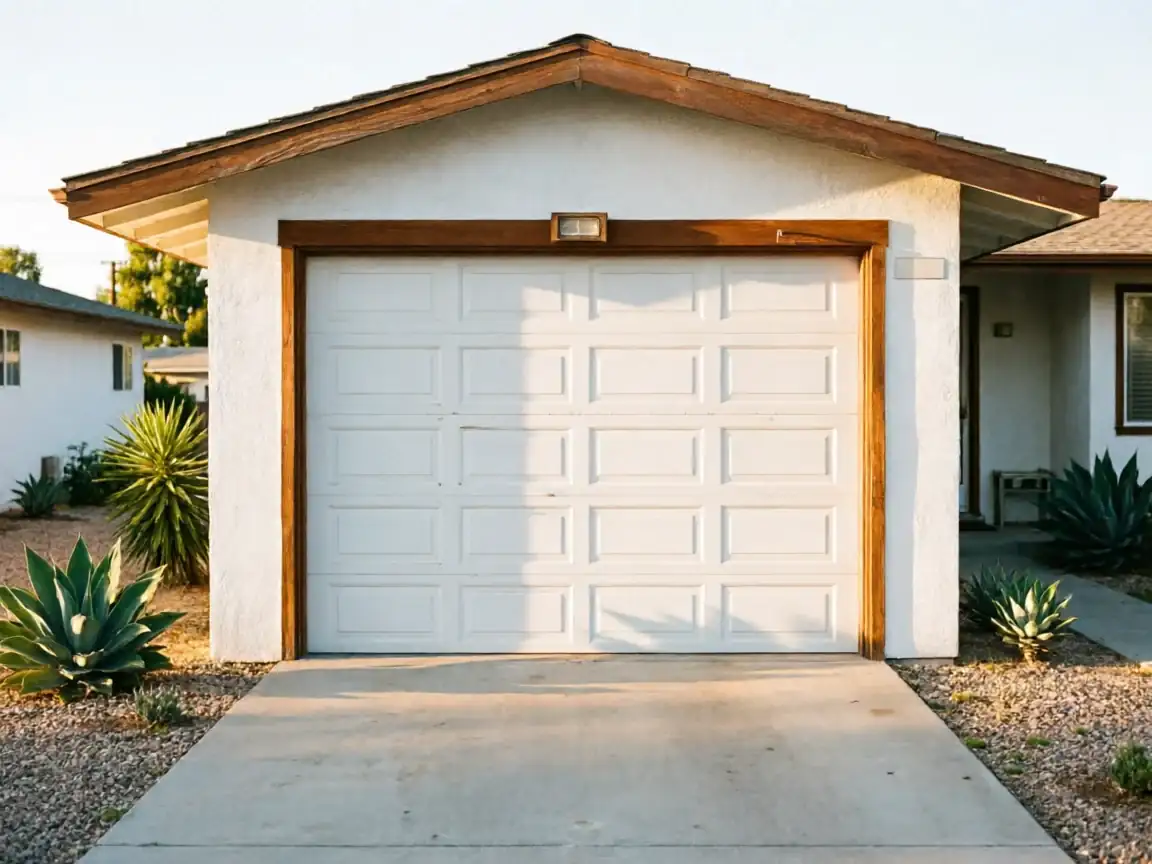
What we don't stock are specialty or custom-width panels - if a 1982-era door has a nonstandard size or a style that's been discontinued, matching panels can mean a parts order with a real lead time, and we'll tell you that cost before you commit rather than after. For most of the 23,503 households in Pittsburg, though, the doors are standard sizes and the common parts cover the repair in one visit.